

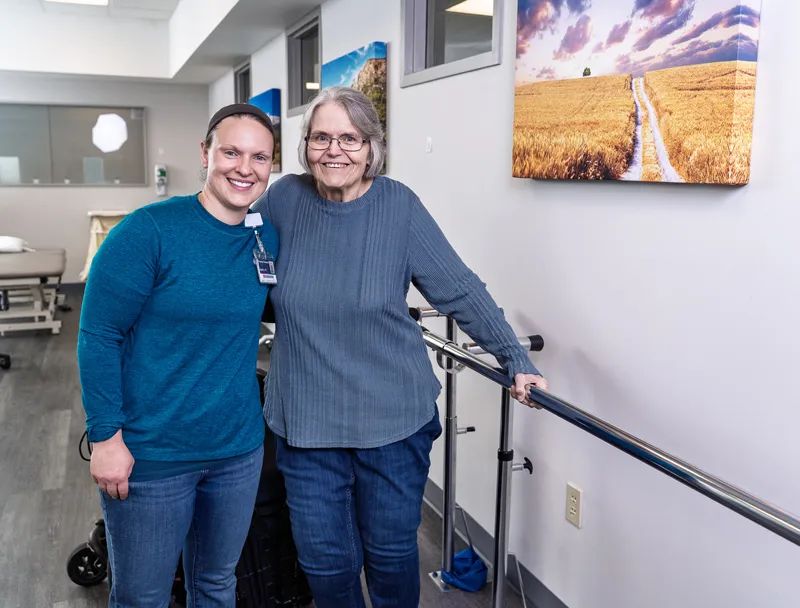
From Homebound to Hopeful
Billings Woman Reclaims Her Life
For most of her life, Carol Raschkow was the one doing the caring. A floor nurse, a home‑care administrator, a mother, a grandmother, the Billings woman spent decades on her feet, moving quickly, solving problems and tending to others. But by her early 50s, her body began to change in ways she couldn’t outrun.
Degenerative spine disease. Severe arthritis. Epilepsy. Compression fractures. Years of chronic pain. And, like so many patients in the early 2000s, long‑term opioid use slowly became its own burden.
“I was on crutches for 17 years,” Carol says. “I kept working as long as I could. But by 2020, I was really struggling to get around. The pain was so bad I couldn’t stand, couldn’t walk, couldn’t even sit upright for long. I was homebound for over a year.”
The decline was swift and steep. The depression that followed was a dark descent of its own.
But today, Carol is standing again in physical therapy. She’s traveling independently to appointments. She’s rebuilding strength in her legs and shoulders. She’s setting goals she once thought impossible. And she credits that transformation to one constant in her life: her long partnership with her primary care provider, Dr. Erica Bruen at Intermountain Health in Billings.
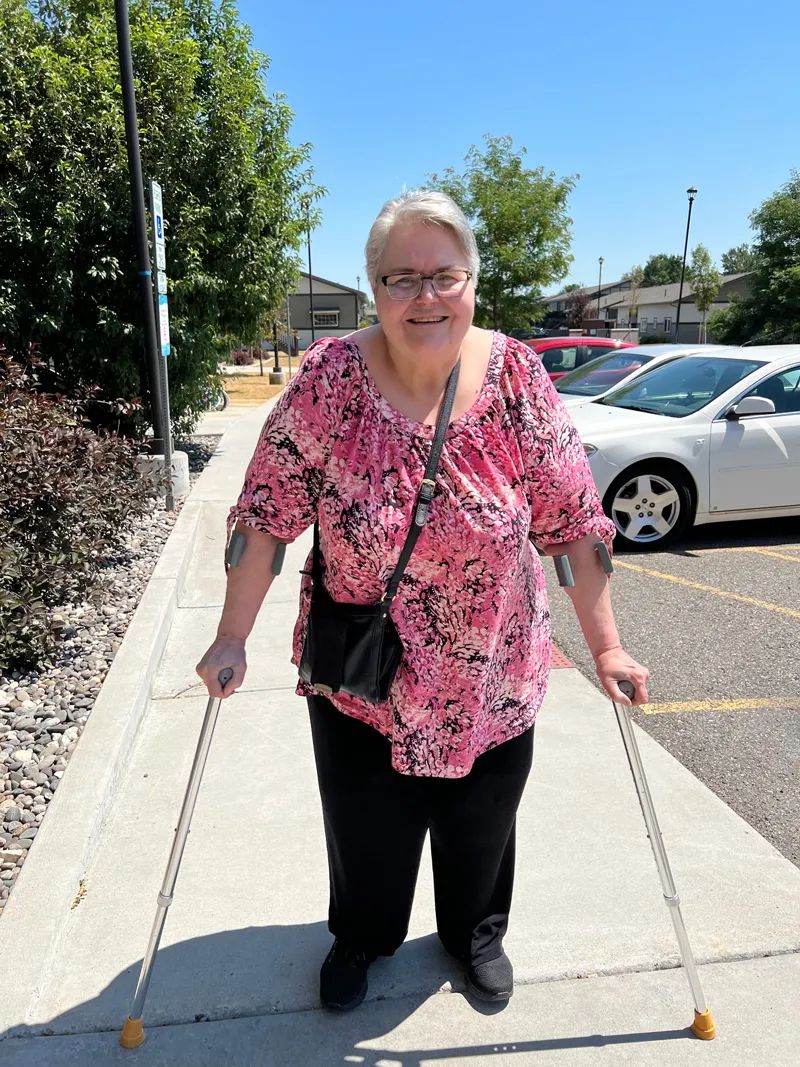
A Partnership Years in the Making
Carol has been with Dr. Bruen for more than a decade, a continuity that became essential as her health challenges grew more complex.
“She's just been excellent,” Carol says. “She researches everything. She doesn’t just send you to any specialist — she finds the one who’s the best fit.”
As Carol’s mobility declined, her doctor coordinated referrals to pain management, neurology, orthopedics and physical therapy. She arranged spinal injections, helped secure specialized equipment, and even challenged insurance to approve a second wheelchair when the first one caused pressure injuries, something that normally requires a five‑year wait.
“She goes the extra mile,” Carol says. “She arranged medical transport when I couldn’t sit long enough to ride in a car. She made sure I could still get MRIs and appointments. She never gave up.”
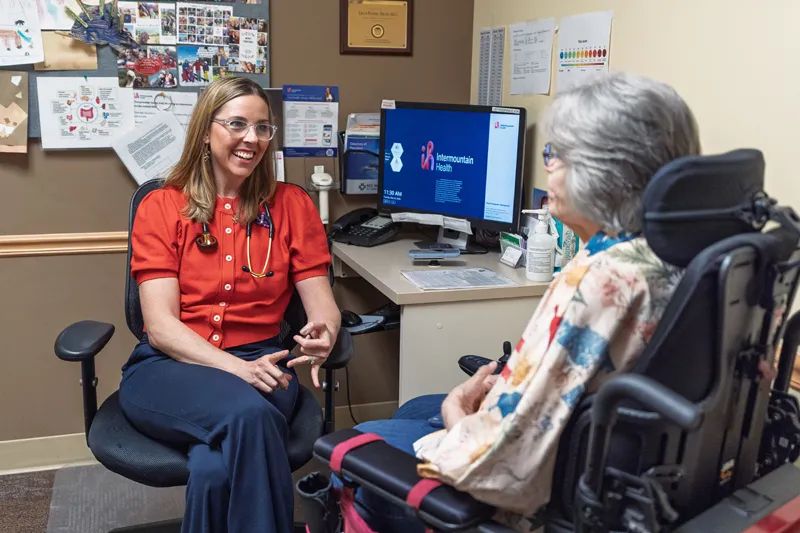
When Carol became fully homebound, their relationship didn’t pause — it shifted online during the COVID epidemic, when virtual appointments became mainstream.
“For four years, I mostly saw her through virtual visits,” Carol recalls. “Those virtual visits were my lifesaver.”
Telemedicine allowed the Intermountain Health physician to monitor symptoms, adjust medications and keep Carol motivated through some of the darkest months of her life.
“When COVID hit, she was so immobile, she couldn’t even come in to see me,” Dr. Bruen says. “Video visits became the only way to take care of her.”
The Turning Point: Letting Go of Opioids
One of the most significant changes came when Carol made a decision — on her own — that she knew would be difficult: She asked for help tapering off long‑term and multiple opioid medications.
“I was on heavy doses for nearly 20 years,” Carol says. “But the pain was still there — and the depression was getting worse.” She finally told her physician: “I want off of this.”
Dr. Bruen, however, knew that it wasn’t going to be easy. Stopping long-term opioid use, especially after years of dependence, can be dangerous if done abruptly or without medical supervision. In her research, she identified one opioid alternative that would work to replace the multiple opioids, one that would hit a different receptor in Carol.
“It helps with the pain,” Dr. Bruen says, “but it doesn't cause a lot of the side effects that we get with the traditional opioids."
With a careful, medically managed plan, Carol slowly transitioned off the earlier medications. Today, she uses only a very low dose of one opioid, and with much more success.
“Those chronic pain medications she’d been started on before my time with her were causing more problems than good,” Dr. Bruen says. “They were contributing to the depression, the sleep problems — all the side effects.”
Once Carol began tapering, the change was dramatic.
“When patients get off the heavy opioids, they often feel so much better,” Dr. Bruen says. “Their pain isn’t necessarily worse, but their energy improves, their mood improves. That’s what happened with Carol.”
Losing 135 Pounds — and Gaining a Second Chance
As her pain and mental health improved, Carol turned her focus to nutrition and overall wellness because she desperately needed a hip replacement, but was in a BMI category that wouldn’t allow for the surgery. The weight began to come off — slowly at first, then rapidly as her mobility improved.
“I had to lose weight before I could have surgery,” Carol says. “When the pain got really bad, I started losing it fast.”
She ultimately lost 135 pounds, enough to qualify for the hip surgery she had long been denied. The procedure, completed in late 2024, became another turning point.
“She started with real momentum,” Dr. Bruen says. “One little thing led to another, then another. It was amazing. I couldn’t believe it.”
Adds Carol proudly: “My worst day now is better than my best day back in 2024.”
Rebuilding Strength, One Step at a Time
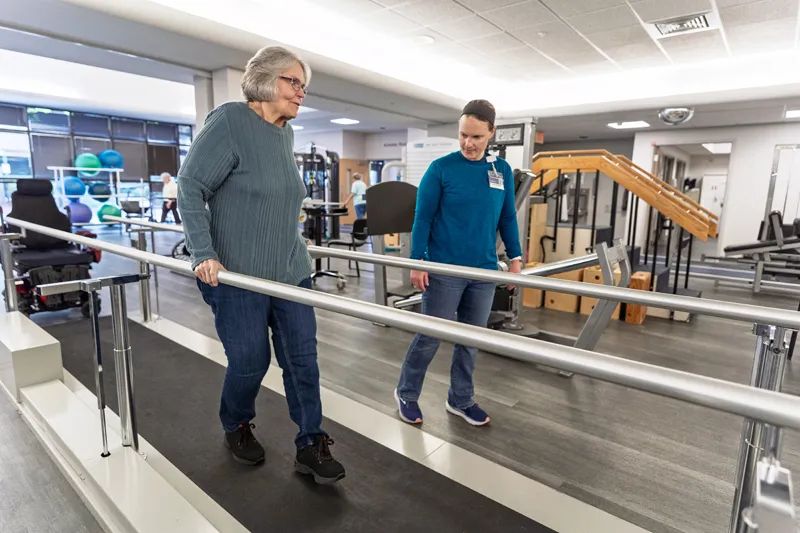
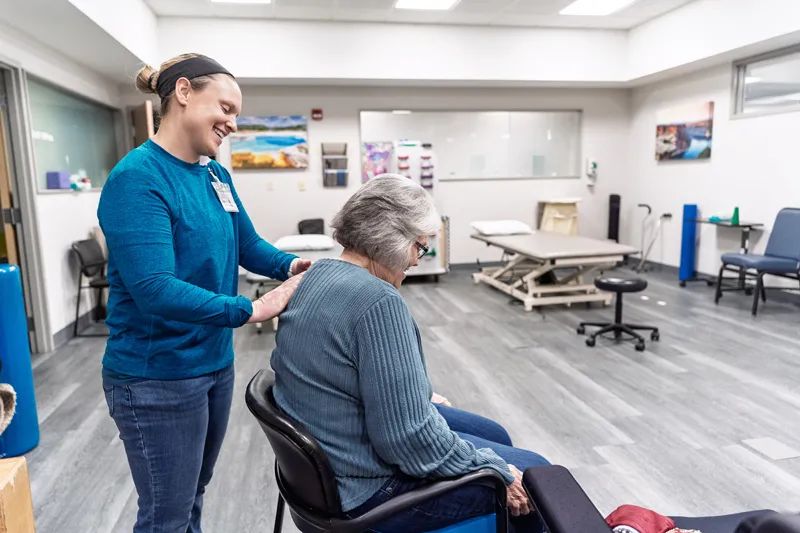
Today, Carol attends physical therapy twice a week at Intermountain. She works on leg strength, shoulder mobility and the everyday tasks most people never think twice about.
“I couldn’t even lift a coffee pot before,” she says. “Now I can stand at the parallel bars. I can take steps with support. These things might seem small, but to me, they’re huge.”
She travels independently using ADA public transit and hopes to drive again someday.
“I’ve gone from only being able to pivot from one chair to another to standing and training my legs again,” she says. “It’s a remarkable change.”
Carol says she also owes a significant part of her recovery to the home‑health team from Compassus in Billings that Dr. Bruen helped arrange. “That’s how I was able to remain in my home. The team she sent in was a Godsend, and I’ve built some lifelong friendships because of them,” Carol says.
The Power of a Provider Who Doesn’t Give Up
For Carol, the story isn’t just about her own perseverance — it’s about the provider who walked every step with her, literally, emotionally and virtually.
Dr. Bruen looks at it as a partnership.
“It was a team effort,” she says. “Carol was motivated, and she advocated for herself. Without her motivation and advocacy, she wouldn’t have been very successful.”
“Dr. Bruen has been my map,” she says. “My guide. My lifeline. As a retired nurse, I’m so grateful there are still doctors this dedicated to individual care.”
She’s hoping her story inspires others.
“If this can help one person transition off longtime opioid use, or help one person stay independent in their home, it would be a blessing,” she says. “It’s been a blessing to me.”