

Planting seeds of hope
One journey. Thousands of lives changed.
More than two decades ago, Heather Lytle planted a seed of hope in 72 African children. Today that seed has flourished into her life’s mission — a mission that has bettered the lives of tens of thousands of young Africans. And it all began when she sought a meaningful way to celebrate her graduation from nursing school.
Locals might know Heather from her time as a nurse and later nurse practitioner at Billings Clinic Same Day Care and the former Express Care. Others have likely heard her speak at one of the area churches that support Hope of Africa, the mission she started so many years ago. Many in the area have donated to her cause and dozens have even traveled to Africa to further the mission.
Heather’s story mimics the story of “If you teach a man to fish.” In her case, she inspired confidence and hope in a handful of young African children who have gone on to inspire those same qualities in so many others.
“It’s truly changing lives,” Heather says. “It’s working, it’s super encouraging and it’s growing exponentially.”
Hope of Africa is based on a simple but powerful mission: the nonprofit strives to transform communities by raising Christ-centered leaders who will pass on that sense of hope and can-do spirit to the generations that follow. That transformation happens with education, training opportunities and entrepreneurship — all supported through ministry. While the mission began in South Africa, it’s since spread to Uganda.
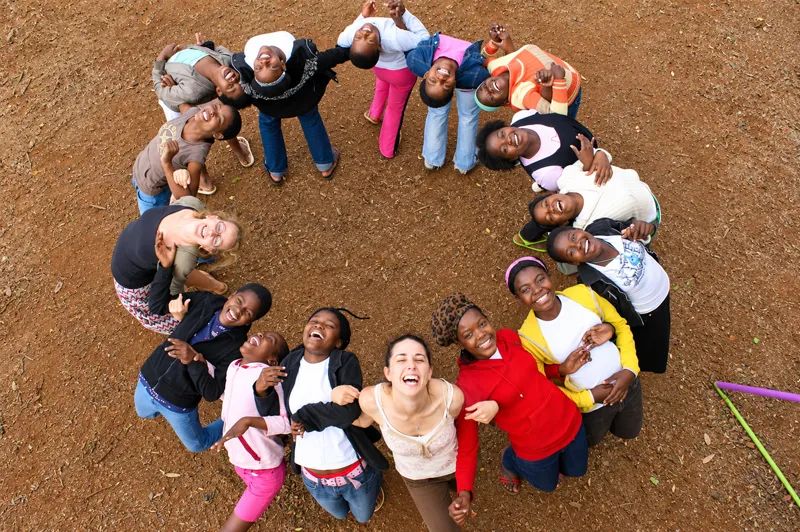
Through youth-to-youth mentorship, Hope of Africa has provided training for tens of thousands of village children. Where three volunteers ran the ministry at its start, now nearly 30 paid staff are supported by an army of interns, volunteers, vocational students and board members.
From the ground up
Hope of Africa’s reach boggles the mind. Besides leadership training, the organization offers a broad array of opportunities — from farming to construction to classes in the prevention of human trafficking and so much more. Lessons are not limited to skills training but include spiritual development and character building.
Montanans have been involved from the ground up. What started by word-of-mouth has grown into an extensive network of supporting individuals and churches.
“Really, this is a journey that Montana farmers and ranchers and Montanans as a whole have rallied behind,” Heather says. “They are vital to us.”
One of them is Jon Brown, owner of the Billings-based Kingdom Builders of Montana, who will be leading his second team to South Africa this fall. He first heard about Hope of Africa through Faith Chapel and was inspired by the organization’s mission and struck by what Heather has accomplished.
“There is a true revival happening with that community and God has placed Heather there for a purpose beyond what I think she even realizes,” he says. “People are changing within the Hope of Africa umbrella and when people change, families change; when families change, communities change. Big things are coming to that region.”

A heart to do something meaningful
Heather’s tie to Africa traces back to 2003, when she graduated as a licensed practical nurse from the College of Technology in Great Falls.
“I had a heart to do something to celebrate my graduation,” she says.
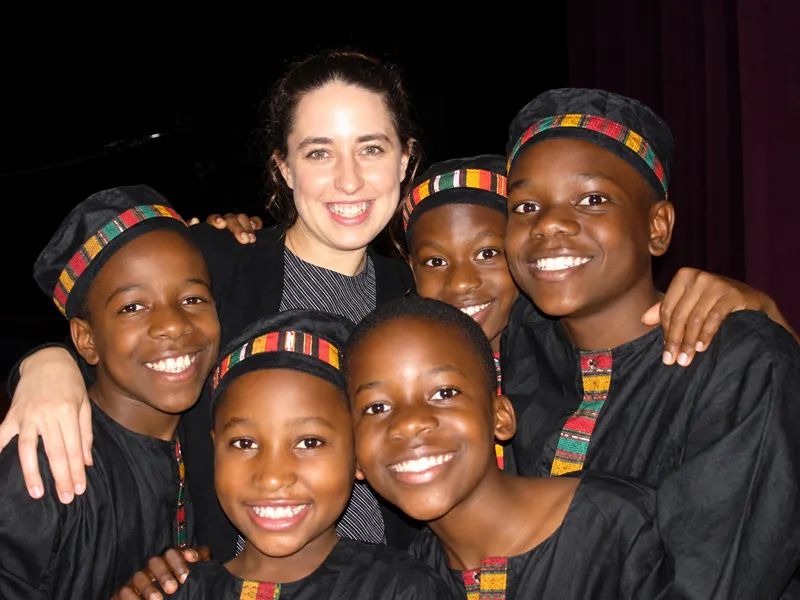
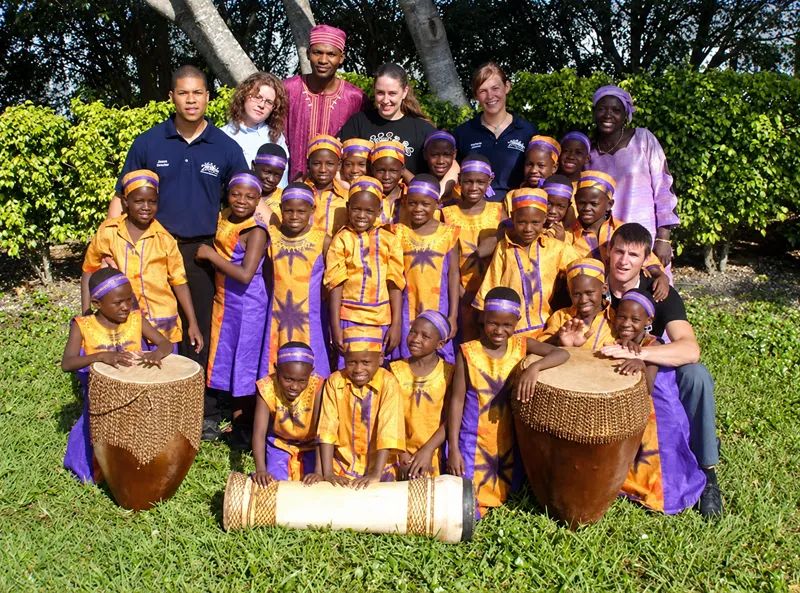
About that time, the 72-member South African Children’s Choir had come to sing at her church.
“These were children 6 to 10 years old,” she says. “They had been picked for their vulnerability, not just their musical talents.”
When Heather refers to “vulnerability,” she explains that the children were mostly orphans whose parents had died of HIV. Many came from Swaziland, the epicenter of the world’s highest concentration of HIV.
“These children shared their stories,” she says. “They were really moving.” They were so moving that she decided to travel to South Africa to see how she might help.
She planned to stay three weeks. That three weeks grew into her life’s mission.
Today, she lives most of the year in Africa, punctuated by a few weeks in the United States and back in Montana where she rallies supporters, raises donations and enlists volunteers for work projects in Africa.
“I’m able to do this work because the partners in Montana help keep this going,” she says.
It's evident that Heather would rather talk about future possibilities than the past. But the past reveals some of the keys to the organization’s success. Raised on a dairy farm in rural upstate New York, Heather was 12 when a family trip to Yellowstone National Park in 1991 proved life-changing for her father — and hence for the family. Drawn to the West, he bought a place outside Choteau and traded dairy farming for ranching. Heather is the oldest of seven siblings and the only daughter. Needless to say, they all pitched in.
“When we moved, it was a pioneering experience,” she says. “We had to rally as a family. We were pounding fence posts, collecting rocks.”
The experience ingrained in Heather a strong work ethic — qualities that have served her well since. She adds that her “oldest child” traits — her attention to detail and her knack at problem-solving — come in handy as well.
“A lot of what I learned (growing up on the land) has translated well to rural Africa,” she says. “Supporting your neighbors and even just the farming itself. It requires team building and delegation — which I use every day.”
Above all, she relies on her faith, on God.
“At key moments, he answered some prayers that were miraculous,” she says.
Worlds apart
When Heather first arrived in South Africa, she came face-to-face with a country where HIV had ravaged the adult population, leaving behind a world where children became adults. And fast.
“There were 12-year-olds who were heads of households,” she says. “HIV was not just something you read about. It was faces and names.”
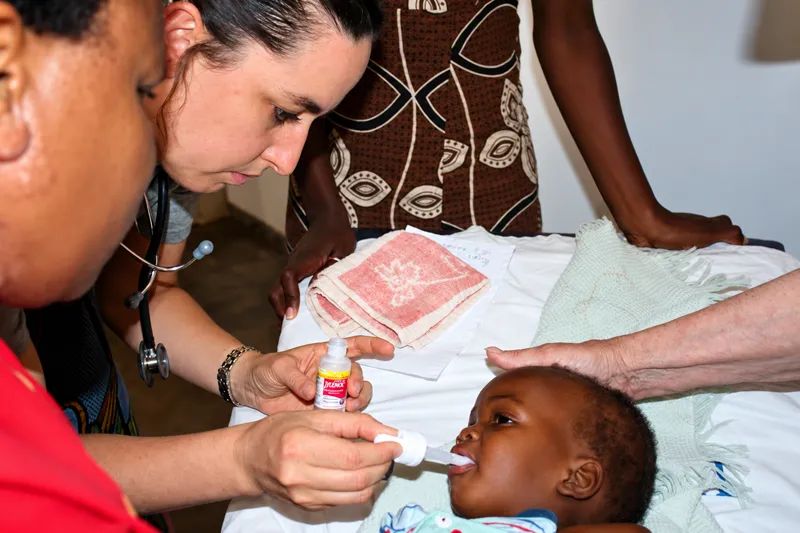
From the get-go, her fresh-out-of-school nursing skills proved invaluable. Almost immediately, she was thrust into a medical support role in rural villages where children lived in extreme situations.
“Hardship can either grow you or defeat you. There is no ‘plan B’ in that environment,” she says. “They (children) are resilient.”
She tells of one 8-year-old who transported her sick mother and infant brother, by wheelbarrow, to her grandmother’s house. The trip took three days, but ended badly. Within 24 hours of their arrival, her mother died of HIV and her brother died of dehydration. Left with a grandmother too elderly to offer much support, the girl essentially lived by her own devices. Sadly, her story is only one of many.
Heather also quickly came to realize that Africa not only faced staggering health problems, but an economic situation that choked its young population.
“Every year, 11.7 million African youths enter the work force, but there are less than four million jobs,” she says.
Seeking to address the root causes of poverty and hardship, Heather focused her efforts on job training and entrepreneurship.
A providential delay
When Heather’s first three weeks in South Africa neared an end, she was asked to stay longer.
“Seeing the conditions of these people, I prayed ‘God, if I can be a voice for the voiceless, show me what I can do,’” she says.
Heather, a “broke college student” at the time, stayed on, waiting on standby for an affordable return ticket. The weeks-long delay proved providential.
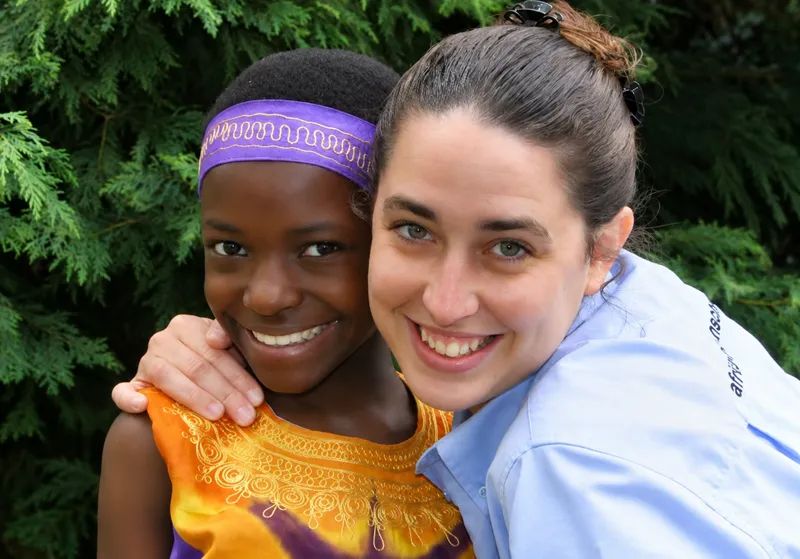
“During that month, I got to know the kids more and I fell in love with them,” she says. “I realized this wasn’t just a short-term thing.”
In the intervening years, Heather’s life has bounced back and forth from Africa to the United States — and always back to Montana. She earned her RN in Bozeman in 2011, later spent more than two years working and studying at Mayo Clinic in Minnesota, and followed that up by taking online classes and clinicals to become a family nurse practitioner several years later. All while parenting African children in her home.
“It was wild,” she says. “We had 12 students living with us fulltime and we had 20 more being tutored after school and having dinner with us each night.”
The ‘we’ Heather refers to includes Ami Shetler, a colleague she met while working at Mayo Clinic. When the two became friends, Heather’s passion for the vulnerable youth in Africa rubbed off on Ami.
“Her vision challenged me to consider how I could use my own gifts and experience to serve in a different way,” Ami says.
Ami, who currently works in Billings Clinic’s Endocrinology Department, went on to spend a year in Africa. She feels the experience shaped her and her view of service and purpose.
“It was truly life-changing,” she says. “Leaving what I considered my ‘dream job’ to serve orphaned youth taught me that sometimes the greatest opportunities in life come when we are willing to step outside what feels safe and comfortable.”
A certain spirit of Africa
Stepping outside what feels safe has been a life choice for Heather. Through it all, the land and the people keep pulling at her.
“There’s a certain spirit of Africa that extends to community and teamwork and focus,” Heather says. “People can survive without each other in the United States; it’s an individualistic culture. In Africa, survival requires your family and everyone pulling together to have basic necessities.” The culture is based on the traditional African philosophy of Ubuntu, which literally means "I am because we are,” she says.
Heather lights up when she talks about the African children — some of them now adults — who have benefitted from Hope of Africa. She tells how the first class of students graduated from a sense of despair to a sense of hope. And how they — and each successive class — continues to share that sense of hope. “We created leadership teams of children,” she says, giving them purpose to think beyond themselves.
Heather’s goal for students has always been for each to graduate with a university education, a rare accomplishment. Less than 1% of their peers go on to earn college degrees. Her first class shattered that statistic, with 75% earning university degrees in teaching, engineering, business management and more. Heather hoped that they’d take those skills back to their villages. But she figured that, with such credentials, they’d be drawn to the city.
“Over 50% wanted to go back to the village to help their families,” she says. “That was a radical moment for me.”
Today, some alumni are running medical clinics, one earned a degree in chemical engineering, others are teaching and yet another even sits on South Africa’s Department of Higher Education.
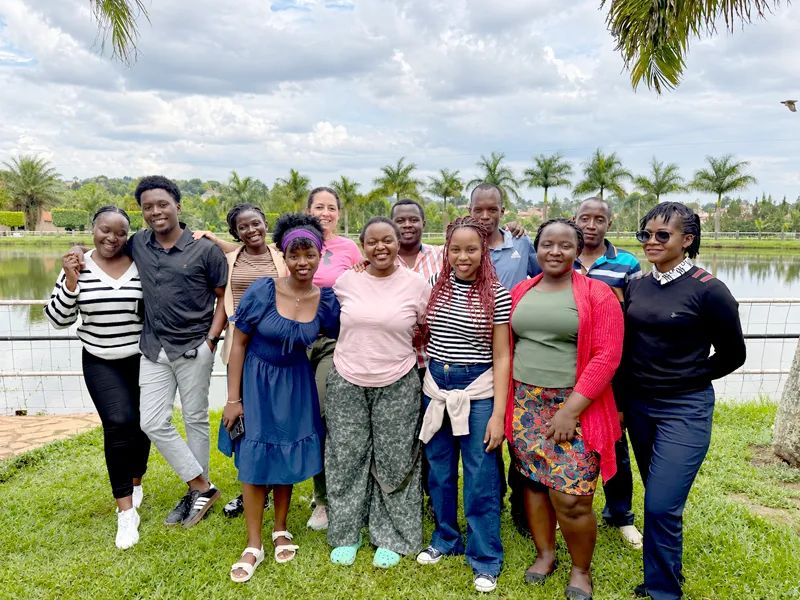
While Hope of Africa grew in South Africa, that same seed of hope jumped borders into Uganda. Heather explains that several Ugandan youths had toured with the original African Children’s Choir and later, two by two, they had come to live and learn with her in South Africa. By their own initiative, and unbeknownst to Heather, a group of Ugandans pooled their money and “adopted” 18 children to run programs similar to those in South Africa.
“It was teenagers and young adults doing it,” she said. “They didn’t even tell me for three years.”
With the purchase of a small parcel of land there, Ugandan youths split their time between studying and working. Those students who can’t afford tuition can cover their fees by working on the farm, Heather explains.
“The end goal is to equip them with a trade.”
Hope of Africa was just hitting its stride when COVID-19 turned the world upside down. The pandemic caught Heather in the United States and sent the African youths back to their villages.
“The schools and churches had shut down. And for 18 months I wasn’t allowed to go to Africa,” she says. “I wasn’t sure we would survive that. I thought the entrepreneurial dream might die with the direness of the situation. But the kids were the light.”
Prayers answered
With months to reflect, Heather decided to devote herself fulltime to Hope of Africa. And then, as she pondered how to expand the ministry, a providential “crossing of paths” took place. A Canadian businessman, attending one of her presentations in Florida, was struck by what she had to say.
“He was about to retire and had been praying for an opportunity like this,” she says.
The opportunity came in the form of a vacant bank building in South Africa that the organization had previously rented. When it came up for sale, the businessman made the down payment and volunteers worked side-by-side with African youths to renovate the building into spaces that fit Hope of Africa’s needs.
Just this past year, the 13,000-square-foot bank was transformed into a craft center, conference room, bakery and food co-op. In the coming months, a team from Faith Chapel in Billings will travel to Africa to finalize a kitchen and dining space for a coffee shop.
“It took longer, but it’s worth it,” Heather says. “They get on-the-job training. We provide the apprenticeship.”
Meanwhile, the dream keeps unfolding. When 67 acres came up for sale, Hope of Africa seized on the opportunity to purchase it.
“In 2024, it was literally bush,” Heather says, describing how eight boys with eight machetes hacked away at the vegetation to clear just a few acres. Then she smiled. “We still don’t have a tractor.”
Last year, students harvested 14,000 heads of cabbage from the acreage, some of which were used in the 80,000 meals served at a drop-in center. This summer, the garden was set to top that harvest by another 2,000 head.
Passing it forward
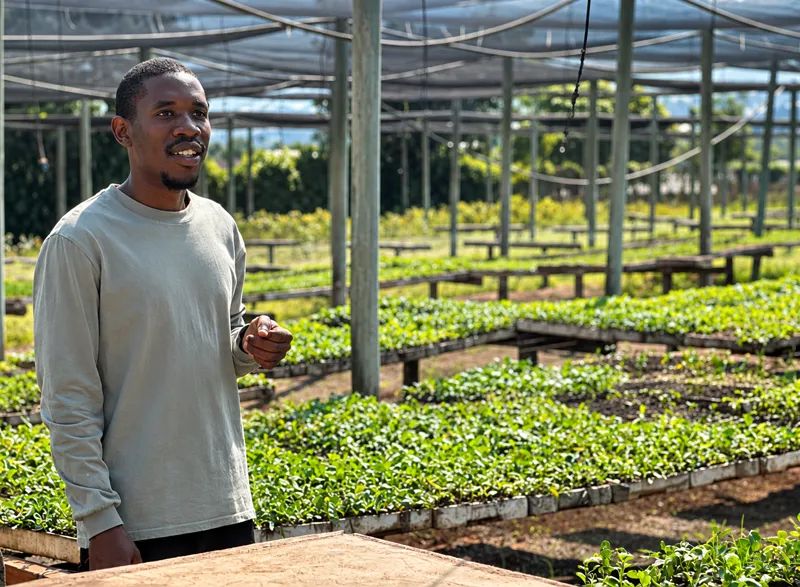
Selby, a graduate of Hope of Africa, currently manages the farm. But before he attained that position, he’d learned about farming from a Hope of Africa alumnus. At first Selby used that training to start his own farm in the village.
“The organization allowed me to start from scratch,” he says. “The aim of the farm is not only to help me and my family, but to help and inspire other young people in my area.”
Martha, another alumnus, found confidence through Hope of Africa’s branch in Uganda. Training as a teacher, she was eager to share that self-assurance. When she prepared for her first day of class, she planned for 100 students. Instead, 300 showed up.
“So, she decided to teach them about being generous,” Heather says.
Thinking creatively, Martha asked each child to bring a sweet potato and a piece of firewood to class the next day. The children followed her instructions, which resulted in enough to feed the growing number of children.
This past summer, Heather was back in Billings, the headquarters of Hope of Africa, to express her thanks to the local churches and individuals who have made the organization thrive. And as she prepared to return to Africa, she reported that more than a dozen Billings residents had signed up to help with projects this fall. She emphasized that Hope of Africa utilizes just about any skill a volunteer might offer — from making crafts, to teaching business skills, marketing, computer literacy, baking, catering, construction and even waiting tables.
“I am really grateful for the people without whom this story would not be possible,” she says.
Then she smiles as she thinks back to the African children she met as a just-graduated nurse in Great Falls, Montana.
“I just saw the potential,” she says. “The first step was the journey with the 72 children and helping their dreams come alive — and dreams that were not selfish dreams. They inspire me in every way, which is why I can keep going.”
TO LEARN MORE about Hope of Africa, go to hopeofafricayouth.com