
Second Chances, One Pulse at a Time
Candy Northey hopes to rebuild lives through laser tattoo removal
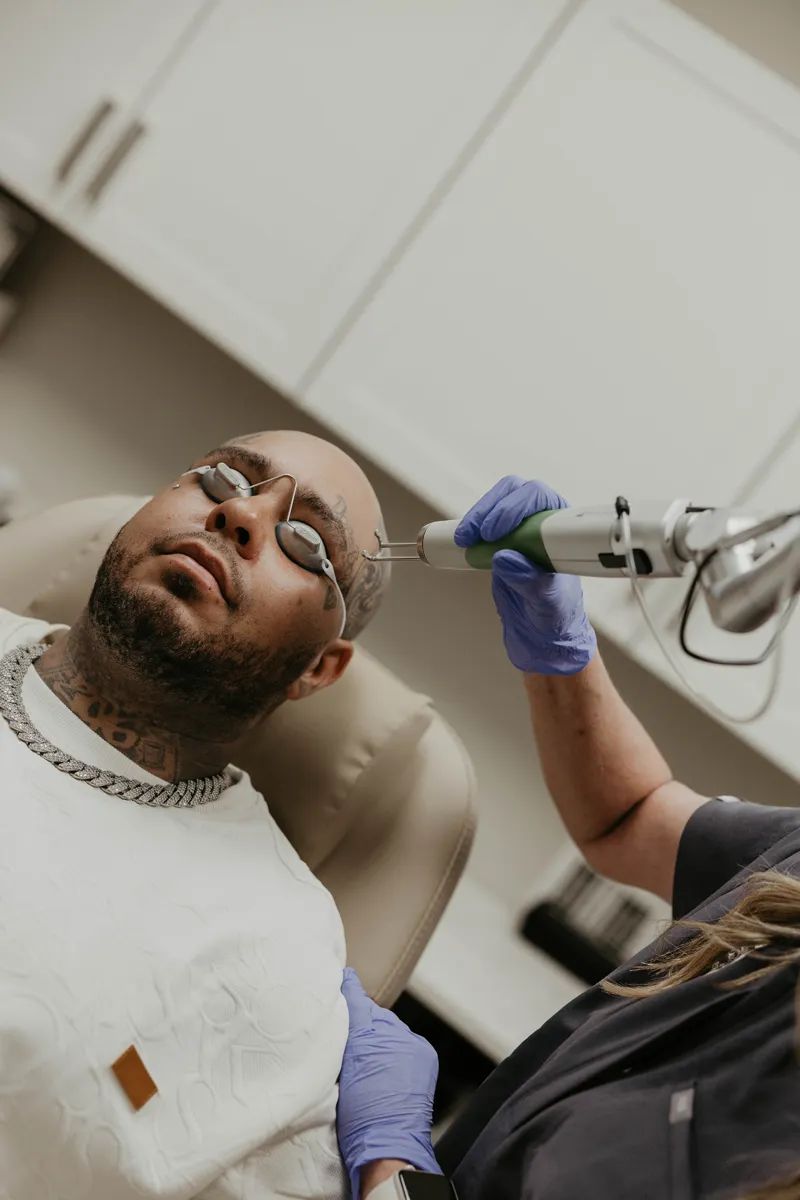
As Candy Northey’s laser moves smoothly over Kiwan Busha’s forehead, a wake of white “frosting” blooms across the tattoo ink. It's the reaction Candy is looking for. Beneath the skin, bursts of laser energy are breaking apart years-old pigment so Kiwan’s own body can slowly flush it from his system. The white frosting will fade within minutes. The tattoo will take months. Maybe a year.
For Kiwan, that's a small price to pay.
"I would always wear hats and try to hide them as much as I could," he says. "They're tattoos that I earned in prison, more of a façade. I was just trying to look cool and fit in the environment that I was in. Now that I'm older and I have a job and am trying to get back into the community. They're kind of embarrassing."
At 31, Kiwan has steady work as a welder. He's rebuilding his life, but the tattoos across his face and head still announce a version of himself he no longer recognizes. One tattoo reads "MOE," which stands for “money over everything.” Shaking his head, he says emphatically, "I don't believe that anymore."
For years, removing them felt impossible. "I thought it was unrealistic," Kiwan says. "I didn't think it was a real opportunity. It's something that I've wanted to do for years. I never thought I would have the money to do that."
The transformation is going to take time. That’s why on a Friday evening every six to eight weeks, he sits in Candy’s chair at Clear Canvas Laser Studio & Aesthetics, watching another small piece of his past begin to disappear.
"I think I'll have more confidence in myself, for sure," he says. "This opportunity is truly a blessing."
For Candy Northey, tattoo removal wasn't supposed to become a calling.
“I love skin,” she says. It prompted her to go to aesthetics school three years ago. She quickly discovered that facials alone weren’t enough. She traveled to Scottsdale, Arizona, to attend classes at the National Laser Institute, where she learned advanced laser procedures. During class, her instructor brought in clients from a working clinic to demonstrate the process of tattoo removal.
“It was all prison tattoos,” Candy says, adding that one man had the words, "White Power," tattooed down his leg.
After his first treatment, he told the class that he had left prison and had three young sons now. The ink was a thing of his past, a past he wanted to leave behind.
"You girls are changing my life," he told them. Later, he sent the instructor a text message thanking them.
"The instructor couldn’t even read it,” Candy says. "She was so choked up. She said, 'This is my why.'"
It became Candy’s why, too.
"I always knew I wanted to do something to make a difference," she says.
Tattoo removal is slow, expensive and far more painful than getting the tattoo in the first place. "I always tell people, 'You're going to be with me awhile,'" Candy says. "I give them a very honest consultation."
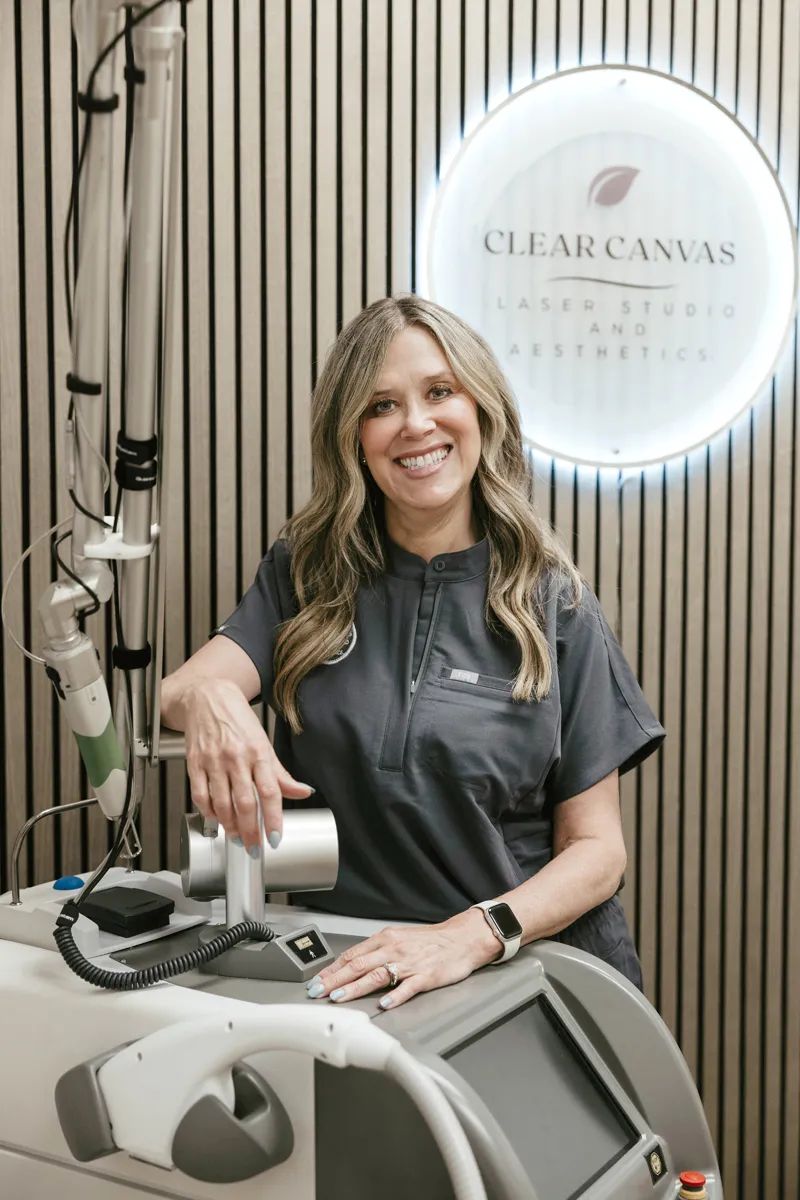
Laser tattoo removal typically takes six to 12 sessions spaced six to eight weeks apart. The laser doesn't erase ink all at once. Instead, it shatters pigment beneath the skin into tiny particles that the body's lymphatic system gradually flushes away through normal biological processes. Each appointment lightens the tattoo just a little more.
Black ink is the easiest to remove. White ink cannot be removed with current laser technology. Yellow is notoriously stubborn. Tattoos on hands and feet often linger because they're farther from the body's circulatory system.
For large tattoos, Candy sometimes treats only half at a time.
"You can make a person ink sick," she says, explaining that overwhelming the body's immune system with too much broken-down pigment can make patients feel ill. To make the treatments tolerable, a medical cooling system blows air as cold as minus 30 degrees Celsius over the skin, numbing the area without interfering with the laser.
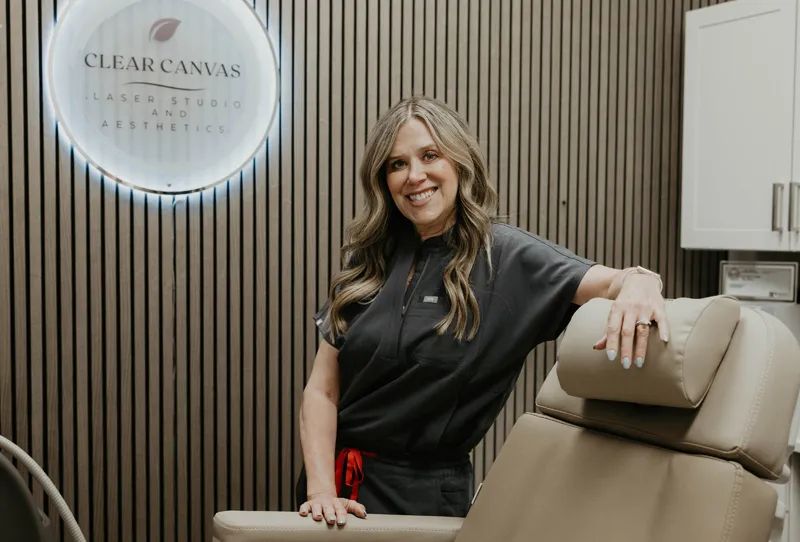
Candy opened Clear Canvas in March with a mission that goes beyond cosmetic work. While she also performs facials, dermaplaning and other laser treatments, tattoo removal is what drew her to open her own studio.
“I am not a big beautiful med spa that someone is intimidated to walk into,” Candy says. “It takes a lot of guts to start the journey of taking a tattoo away.”
She then tells the story of one of her clients who had a slew of tattoos on his face and neck. She remembers him telling her, “I had this job lined up and I got there, they took one look at me and said, ‘I can’t hire you.’” She adds, “They are trying to get back into society and it’s hard.”
She wants to change that. She’s reaching out to nonprofit organizations that work with people post-incarceration, the Department of Corrections and the Department of Justice in the hope of creating funding for people who can't afford treatment.
"I'll offer it at little to zero cost," she says. "People who are coming out of prison don't have a lot of extra money."
She believes tattoo removal is about far more than appearance. "It becomes a tool for dignity, opportunity and second chances,” she says.
Ironically, Kiwan found Candy by pure chance. Before her studio was even finished, Candy and her husband were sketching out plans over dinner at a restaurant when their server overheard them talking about tattoo removal.
"My boyfriend has all these tattoos and he can't find anybody to remove them," she told Candy. That boyfriend was Kiwan. The introduction changed both of their lives.
Today, Kiwan continues making the trip through treatment after treatment, each one another small step toward the future he wants.
"They trust me enough to work on their skin," Candy says. "And when they're ready to tell me their story, they will." She adds, “What I see in my studio every day is transformation. Opening this studio has been a labor of love in the hopes of changing lives and making a difference. Our world needs a little help right now.”


