

Two Miles to Survival
After a prairie rattlesnake struck on a remote Rim trail, Rebekah McKenzie had one goal: keep moving.
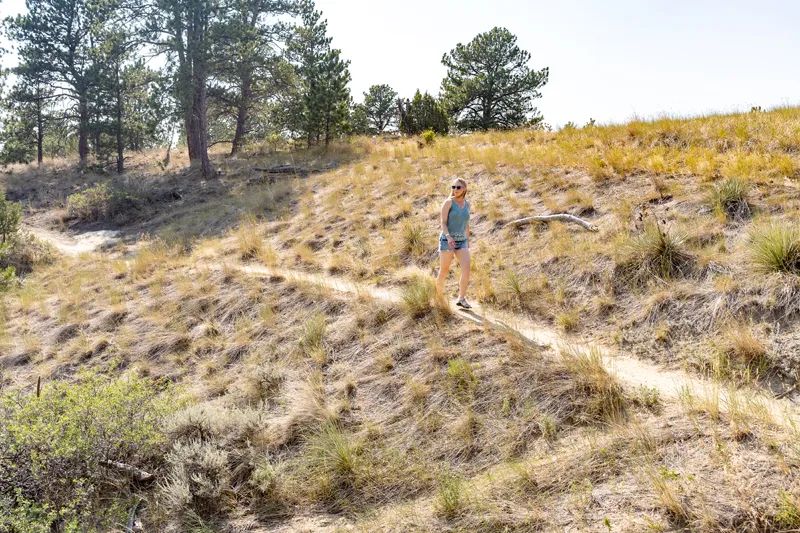
Rebekah McKenzie has replayed the morning of July 10th countless times. It’s been weeks but she can still see the rugged trail winding through the sandstone outcroppings above Billings' Ironwood subdivision. She remembers thinking it might be too warm for her usual trail run. She also remembers checking the weather, hesitating, then deciding she simply needed to get her workout in.
"I looked at the weather and thought, I just have to get a run in even though it's warm. It was about 70 degrees," she says. "When I went up there, I remember thinking, ‘Oh, it's too hot.’" In this rocky terrain, every degree above 60 increases the chances of spotting a rattlesnake.
About two miles in, Rebekah was running along the trail’s high line when she decided to take a more rugged trail down. She loved the challenge of boulder hopping.
“I always look ahead on the trail because you do see snakes every once and a while. They can be sunbathing,” Rebekah says. “I usually see them, stop, back up and go all the way around or turn around.”
This time, however, she didn’t see it coming until she felt something slam into her shin.
"I looked down and there was a huge snake on my leg." Instinctively she kicked her leg, sending the flying snake behind her. When she turned, it was already coiled again, ready to strike.
“I think he was behind a rock and the vibrations of me coming got him mad,” Rebekah says, adding she stepped back just far enough to snap a photo with her phone and check the time. 7:55 a.m. "He was so angry. His black tongue was out, hissing at me.”
She was nearly two miles from the trailhead. Alone.
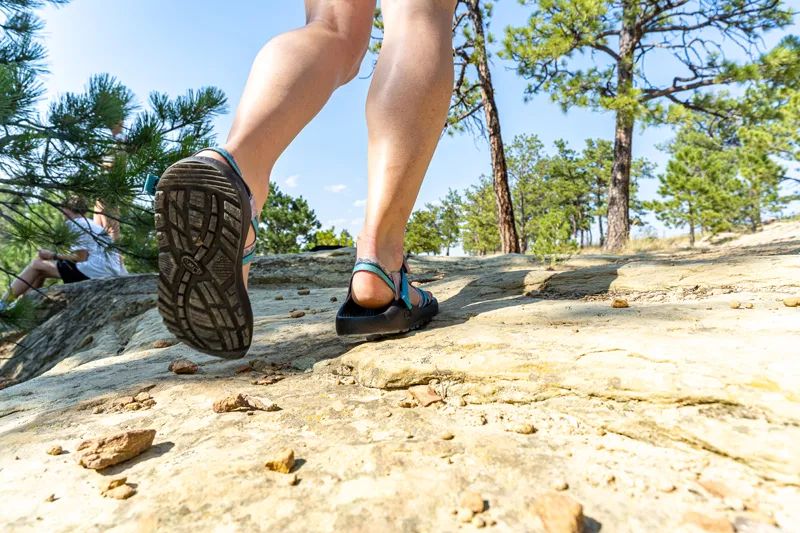
Everything she'd ever heard about snakebites told her not to move. But staying put didn't seem like an option. An ambulance couldn't simply drive to her location. Rescue crews would have to hike two miles over rugged terrain carrying a stretcher up and then down the trail, costing precious time.
"You need to get to antivenom as fast as you can," she says. So, she made the decision to run. While navigating loose rocks and steep terrain, she called her teenage daughter, Marilyn.
"I just got bit. I don't know if it's venomous, but I need you to run over to our neighbor Jessica,” Rebekah remembers saying. “Pound on her door and tell her to meet me at the trailhead.”
Then, she called her husband, Jeff, a Billings anesthesiologist. He was supposed to be in surgery at the time but a mishap delayed it. It was while the two were on the phone that she started to feel the bite’s effects.
“It was about four minutes in and the pain just started searing. It felt like my leg was burning,” she says. “About seven minutes in, my lips started tingling and my tongue started feeling thicker.” As she told her husband what was happening, “He said, ‘It’s hitting your central nervous system. Your airway is next, so keep going.’”
Jeff stayed on the phone. While he was outwardly calm, his thoughts were frantic.
“My wife just got bit by a rattlesnake,” he says, recalling the moment. “There’s nothing more terrifying.”
Just as Rebekah made it to the trailhead, her neighbor and daughter pulled up, ready to rush her to the hospital. They called 9-1-1 and a dispatcher said if her symptoms worsened, they had an ambulance ready to meet them on the way.
“At this point, the pain was increasing and my leg was starting to swell,” Rebekah says. As they pulled up to the Billings Clinic Emergency Department, her husband was there waiting at the entrance.
“He ran out, picked me up and we literally flew past security, past check-in straight to a room where they started hooking me up right away,” she says. “I’ve never seen anything like it.”
The next 36 hours would be dicey. A prairie rattlesnake’s venom doesn’t simply cause pain; it can disrupt the body’s ability to clot blood. That can set off a chain reaction, triggering dangerous swelling, which in turn threatens muscles, nerves and circulation. Without getting the swelling under control, pressure builds, Jeff explains.
"They monitor the swelling, make sure the leg isn't getting cold and that the pulse is there," he says. "If it gets too big ... there's risk of amputation."
Rebekah ultimately received 30 vials of antivenom while her doctor constantly consulted with a toxicologist. At about the 36-hour mark, she started to turn the corner. Two days later, she was home.
She had to use a walker for a couple weeks, but by week three, she was already back to exercising at about 60% of her norm. She still has pain but it, along with the fang marks, are starting to fade.
“If you feel my leg here, it’s hard,” she says pointing to the area of the bite. “The tissue is still recovering.”
As the family reflects on that day, they’ve come to have a sense of humor about the ordeal now that the danger is in their rear view. Rebekah is a speech pathologist and works with kids.
“Actually, the first week back we played snake games — Snakes and Ladders — and I was able to tell all of them that I speak parselmouth now,” she says with a laugh. “I also told them that sometimes my tongue turns black.”
Jeff bought her a pair of rattlesnake earrings, along with a pair of snake gaiters to put on her legs for protection. He knows she’ll never give up trail running. He learned something about her that day.
“My wife is cool and calm under pressure,” Jeff says.
Rebekah just feels a ton of gratitude for how it all unfolded.
“It still hurts but I am hoping that it will go away with more time,” she says. “I have my leg. I have my mobility. I got out the best possible way.”
While deaths from rattlesnake bites are rare in the United States — only about five people die each year. The CDC reports, however, that between 10% and 44% of people bitten by rattlesnakes are left with lasting injuries.

Despite Montana's reputation as rattlesnake country, bites are surprisingly rare. Medical experts estimate that only about five to six people are bitten by rattlesnakes in the state each year.
Snake Sense
What to do before—and after—a rattlesnake bite
· Carry your cellphone.
· If you're bitten, move away from the snake.
· Note the exact time of the bite. This helps the medical professionals with treatment.
· Get medical care immediately.
· Avoid hiking or running during the hottest parts of the day, when snakes are most active.