

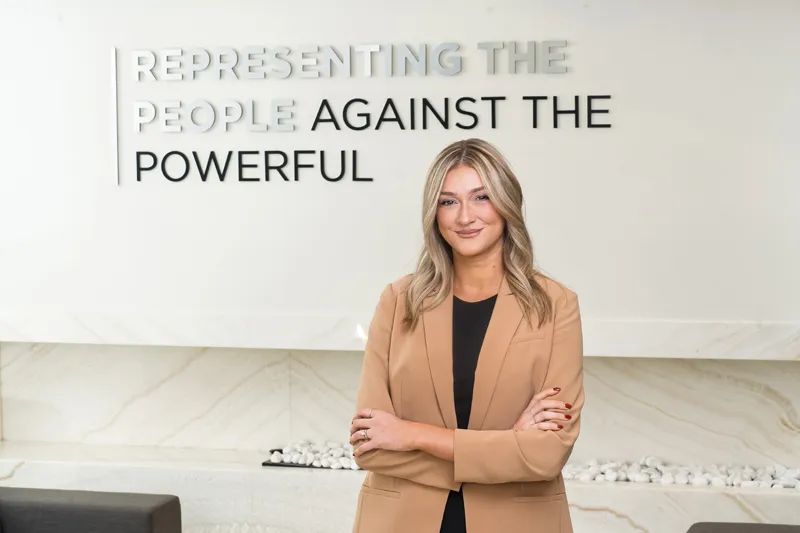
“No One Believed Them”
How Kasodie West Found Her Calling Fighting for Survivors
Editor’s Note: Please note, this story contains explicit details relating to sexual assault and may be upsetting to readers.
By the time Kasodie West walks into a courtroom, she already knows something crucial about many of the women she represents. They’ve spent months, if not years, wondering whether anyone would ever believe them.
In two separate cases this year, at least 32 sexual-assault victims got the answer to that question. In one court case, their abuser landed a 40-year prison sentence for sexually assaulting them while he served as an emergency room doctor. In another, the women impacted by the sexual abuse got an eight-figure settlement tied to institutional failures.
Kasodie and her partner, Andrew Van Arsdale, represented 28 of the women.
“Hands down, without a doubt, this is one of the biggest things I have done. One of my biggest accomplishments,” she says.
The allegations against former emergency room doctor, Tyler Hurst, were deeply disturbing. Women reported entering the emergency room for issues like headaches, back pain, or even an ankle injury, before their exams escalated into sexual assault
“He would do this by shock and awe,” she says. “One of the victims went in for a headache and he would say, ‘Well, let’s make sure you don’t have anything else. Does it hurt if I press here? Does it hurt if I press here?’ And he would go further down the body. They would ask, ‘What are you doing? What are you doing?’ He would give them Dilaudid (a potent opioid) to drug them and make them (feel) out of it.” Kasodie adds that the physician tended to target minorities or women with substance abuse issues — “People he thought no one would believe.”
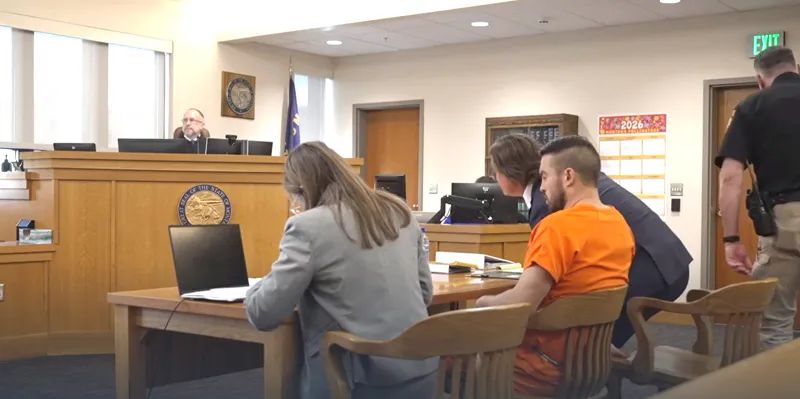
Stacey, whose last name we are withholding to protect her identity, is a 44-year-old mother of three. She went into Community Medical Center in Missoula for what she feared was a severe kidney infection.
“I had blood in my urine, and I was running a fever,” Stacey says. “They brought me down to a room, which was down a kind of dark hallway. It wasn’t anywhere near the nurse’s station.”
After a nurse put in an IV, Hurst told her he was going to give her something for the pain.
“The pain medicine seemed like it was way too much, and so I was really out of it,” Stacey says. That’s when Hurst told her he’d like to do a physical exam.
“When he went to listen to my breath sounds, he lifted up my shirt, all the way up so it exposed my breasts,” she says, her voice shaking. “That made me super uncomfortable. I pulled my shirt back down, and he pulled it back up.”
Then things escalated. Stacey described the events that led Hurst to pull down her pants and attempt to rub her genitals under the premise of easing her pain. When she screamed and told him to stop, he stuck his ungloved hand inside her.
“I was so shocked and out of it, I thought, ‘Oh my God, did that just happen?’”
Before it was over, Hurst would assault her again, this time violently, becoming physically aroused in the process.
“At this point, I am completely freaked out. My heart is pounding, and I am literally in tears,” Stacey says, adding Hurst apologized and later told her, “I’m sorry. That went way too far.”
Surveillance footage showed Hurst spent nearly 40 minutes alone with Stacey during the attack.
For 24 hours afterward, she says, “I laid in my room, bawling my eyes out.” She ended up calling 9-1-1 to report the incident. When she later talked to a detective, she told the officer she wanted to make sure what happened to her never happened to anyone else. “That’s when he told me, ‘I really hate to say this, but you are not the only one.’”
The investigation showed many of his 30 victims had made reports to the medical center, but still, Hurst ended up practicing in Missoula for more than seven years.
“Kasodie swore to me, ‘We will get him. We will hold him accountable,’” Stacey says. With Hurst now behind bars for the next 40 years on seven charges of sexual assault, Stacey says she feels she can finally begin to heal. “I hate that this happened to me, but one thing that changed it all for me was having somebody stand up for me and all of those other women,” she says, adding that’s where Kasodie shines.
“You get angry. How did this happen? Why did this happen? Why is this person getting away with this?” Kasodie says. “Doctors aren’t supposed to cause harm.”
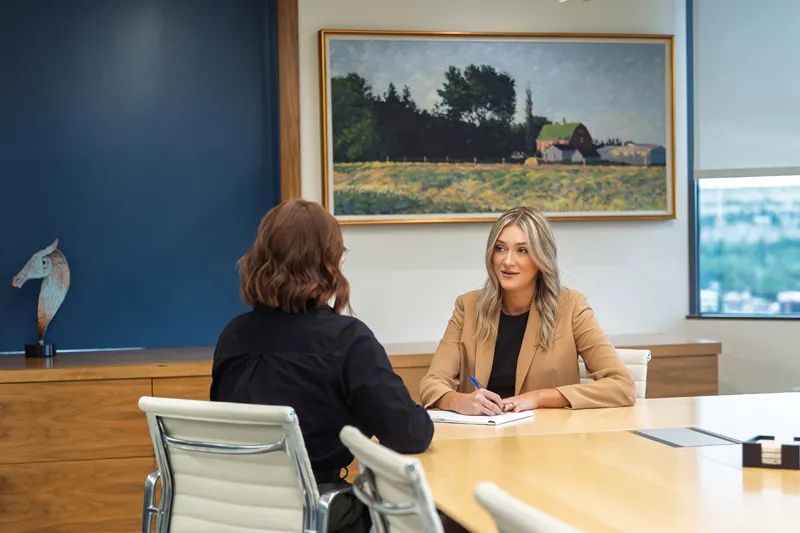
Today, as a partner at AVA Law Group in Billings, Kasodie is one, if not the only, female civil litigators in Billings who has made a career out of fighting for sexual abuse survivors on a large scale. While she does focus on perpetrators, she uses the legal system to force institutions to answer for the harm they allowed — or, worse yet, ignored. Hospitals. Treatment facilities. Systems that failed to protect vulnerable people.
“I think what really impresses me about Kasodie is her ability to show compassion and build connections with victims of sexual assault in a way that engenders trust,” says Teague Westrope, Kasodie’s partner at AVA Law. Teague calls her “wicked smart” and says, even when he was a prosecutor working in the city attorney’s office, he knew she was a standout. “There is just a dynamic energy about her.”
One of the very first cases Kasodie worked on at AVA Law was the sexual abuse case against the Boy Scouts of America. It was a case with 80,000 victims, a dozen of whom called Montana home.
“I think the Boy Scouts case surprised me. How did this systematic abuse happen for so long, and the Boy Scouts covered it up and didn’t take any precautions to protect children?” she says.
Today, that case is in the victim compensation phase after the court reached a settlement valued at more than $2.4 billion.
The case that thrust her into the international spotlight, however, came when she began helping with the civil litigation against rap mogul Sean "Diddy" Combs — a case that led to her appearance as a source in the BBC documentary “Diddy: In Plain Sight” and had one of her legal complaints become the punchline of a Saturday Night Live joke.
AVA Law Group's sister company, Reciprocity Industries — a Billings-based legal services and call center operation — became a primary intake hotline for those reporting sexual abuse allegations against Combs. Calls deemed credible were referred to AVA Law for review and potential legal action. Several of the cases landed on Kasodie’s desk, including one involving a man who alleges that, at 17, he was sexually assaulted backstage by Combs after filming an episode of the MTV reality series, “Making the Band.”
Not long after she filed the man’s case, she and her husband were watching Saturday Night Live’s Weekend Update when comedian Michael Che talked about the sexual assault allegations, ending his commentary saying, “I hope he made the band.”
“I think I was so shocked that it was even happening. I was just really taken aback,” she says. “It just goes to show how sexual assault allegations are taken in our society.”
After an eight-week trial in June 2025, a jury convicted Combs on two counts of transportation to engage in prostitution but cleared him of the most severe charges — sex trafficking and racketeering. He was handed a 50-month prison sentence.
“I had a really hard time with that case. I just think it set us back so far. The prosecution brought the case prematurely and didn’t have the evidence they needed to back the claims that they were making,” Kasodie says. “They shouldn’t have brought it if they couldn't prove it.”
The disappointment still lingers because even though the civil cases have yet to be heard in court, Kasodie believes the criminal case represented something bigger.
“It could have been a moment where we said, ‘enough is enough,’” she says. “Just because you have power and money, doesn’t mean you get to get away with it.”
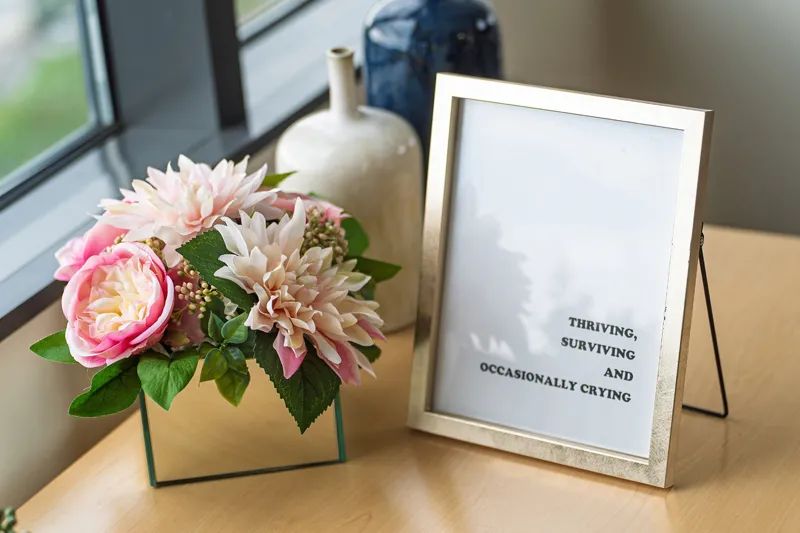
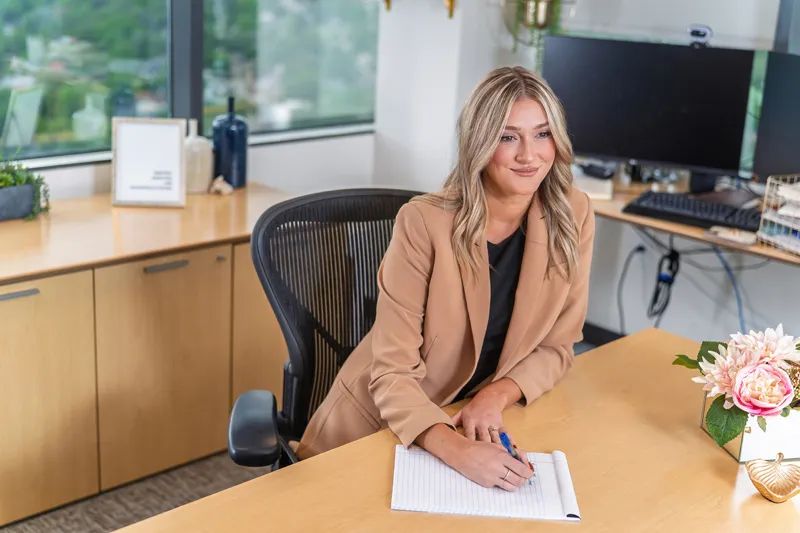
In Kasodie’s office, a framed sign sits behind her desk that reads, “Thriving, surviving, and occasionally crying.” When asked about it she laughs, “Yes, it’s true. I cried in this office yesterday. I just have a mashed-potato heart.”
She never wants to lose that, knowing that empathy helps her when she is fighting for sexual-abuse victims. Her mission with this work is to make the world a little better, especially for her 2-year-old son and infant daughter.
“I wish there didn’t need to be a sexual-assault civil attorney. Ever. But here we are,” she says. “I want to be a really good female role model for my daughter and for my son. That’s incredibly important to me.”
There’s little doubt that her job comes with long hours that can be mentally exhausting. She says that when she walks out of her office, however, she tries very hard to be fully present in the lives of her family.
“Did you ever watch that Shonda Rhimes graduation speech? She talked about the fact that when she was excelling in her career, she wasn’t excelling at home. When she was excelling at home, she wasn’t excelling in her career. And she said, ‘I think women, whether they're stay-at-home moms or if they are out in the work force, it is something that each and every one of us struggles with every day,’” Kasodie says. “Sometimes I balance, and sometimes I fail at balancing. I can be very vulnerable about that part of my life because it is really, really hard.”
Regardless, she feels blessed to balance life between her family and fulfilling work.
“I am really lucky to be in the position that I am to help women in this community. I have to remind myself that I get to do this every day and I get to make a difference every day,” she says. “This is the most meaningful, cup-filling work for me.”


