

A Zest for Flavor
Why a splash of spice and a passion for cooking can transform every dish
There’s little doubt that spices can make a dish pop with flavor and dimension, adding interest and taste. For Marguerite Jodry, owner of Zest, spices are currency spent to add more layers and depth to food.
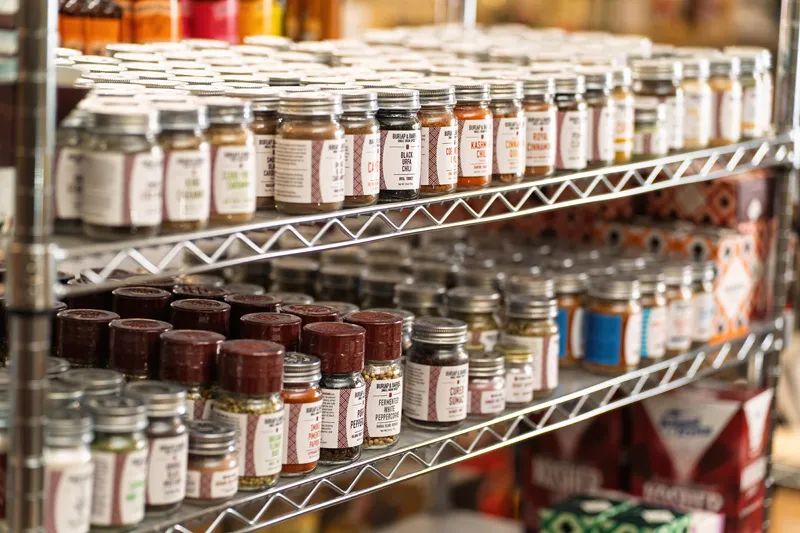
At the kitchen store she opened in 2020, Marguerite has been equipping novice cooks and experienced chefs alike with tools and equipment for a more delicious life. Among the 6,000 items she sells in her 1,700-square-foot shop, she prides herself on offering spices sourced directly from farmers and foragers from all over the world.
“We have single-origin spices, coming from a single farm or organization from a small geographical area,” she says.
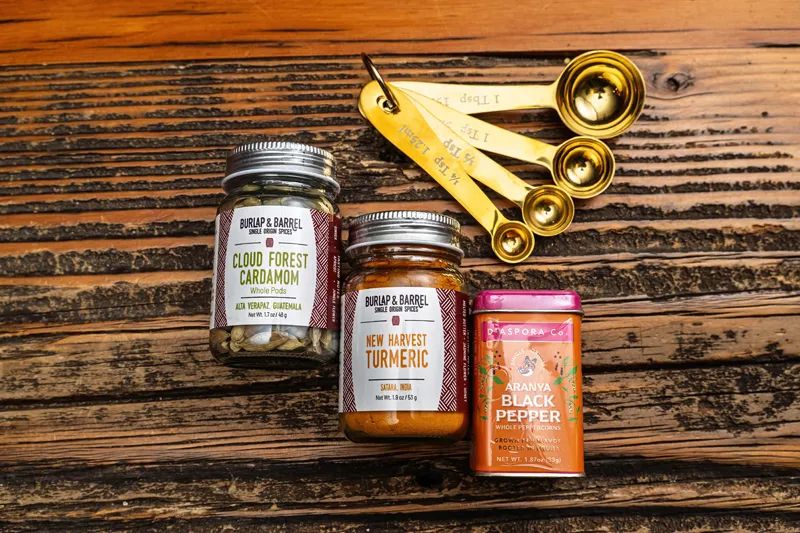
Burlap & Barrel and Diaspora make some of her favorite spices. The seasonings bring flavor and traditions across borders into our kitchens.
With single-origin spices, Marguerite says, “You get to explore the unique characteristics of the spice.” For instance, she sells turmeric from two regions and two farms. “They are very different.”
“The Burlap & Barrel New Harvest Turmeric from Satara in midwestern India is brighter, spicier and stronger,” she says. “The Diaspora Pragati Turmeric is mellower, with floral notes and a more well-rounded flavor.”
At a tasting she offered at the Yellowstone Valley Farmer’s Market last summer, Marguerite presented a blind smell test with two of her varieties of turmeric, along with a grocery store brand. “Nobody could smell anything coming from the grocery store spice except musty notes,” she says. “The color was muddy, brown with yellow tones.”
For those who participated in the experiment, new-found discoveries were made. “People didn’t even know that they liked turmeric,” she says. “It should be floral, nutty and spicy.”
Best Practices
To cook with spices in the most optimal condition, “Check the expiration date before you buy a bottle of spice,” Marguerite recommends. “For example, Burlap & Barrel has a December 2026 date, which means they packed the spice in 2024. It’s best to buy a spice that has a two-year expiration date.”
If the date is five years out, she adds, “It might be good in the cupboard but not for the taste.” For the best results for cooking, “Use the spice within a year, two years, at the most. Smell your spice. Ask yourself whether it smells fresh or musty.”
Keeping spices out of direct sunlight and storing them at room temperature in tightly sealed containers will help maintain long-term freshness.
Whole versus Ground
When spices are kept intact, they retain their flavor and taste longer. “It’s ideal to keep a whole spice, but it’s not perfect,” Marguerite says. “It’s great to have whole cloves, allspice, cardamom, and peppercorns. Once they are ground up, they lose their flavors quickly.”
With roots such as ginger, turmeric, galangal, garlic or onion, Marguerite suggests buying the ground version. For cinnamon, you can use the ground spice to sprinkle on oatmeal, but reach for cinnamon sticks when infusing cider.
Bring on the Heat
Did you know that some spices benefit from a bit of heat? “It activates their volatile oils,” Marguerite says. “Cumin, coriander, cloves and mustard seeds, when heated, really showcase their flavors and aromas.”
Heating a flat-bottomed pan over medium heat is best for toasting spices.
“Add the spices and do not move the pan around as it heats. Don’t go anywhere,” Marguerite warns. “Use your nose to monitor as the spices are toasting. In 30 to 60 seconds, you will get a hit of aroma.” For the best flavor, she says, “Toast just before using.”
Grinder versus Mortar and Pestle
Traditionally, spices have been manually pounded by hand into a powder. If you feel up to the task, your palette might thank you.
“Get a mortar that is a deep bowl. This way, the spices don’t fly out. Make sure the bottom of the bowl has some texture,” Marguerite says, as it is more challenging to grind up spices on a smooth surface.
At Zest, Jodry sells molcajetes, traditional Mexican mortar-and-pestle sets made from porous volcanic rock. But she says you can also use a dedicated coffee grinder to get the job done. Another alternative is a FinaMill, a multi-purpose spice grinder with interchangeable pods.
Spicing Up Your Recipes
Spices can elevate the personality of any dish. For this reason, Marguerite suggests spicing up a Super Bowl party by adding “a bunch of ground chili to a queso dip along with some black lime to give the crowd favorite a citrusy tang. For Valentine’s Day, consider adding cinnamon, chili powder, and ground cloves to a chocolate cake.”
In the end, Marguerite says, “Food is an experience. Spices add dimension to food.” So, in her words, look for ways, “to make any dish deeper and richer.”
Madras Curry Powder
Yields 1 cup
This Southern Indian spice blend (known as a Masala in Hindi) is the most common “curry” found in Europe and America. The exact ingredients and their proportions can vary widely. This is just one recipe we enjoy, using commonly available spices.
2 T. whole coriander seeds
1 T. whole cumin seeds
1 t. fenugreek seeds
10 to 15 whole green cardamom pods
1 t. whole pepper
Kashmiri chili, to taste (this variety of chili is very spicy, so use cautiously)
2 T. ground turmeric
Toast the coriander, cumin, fenugreek, cardamom, and black pepper in a skillet over medium-high heat until fragrant. Add to a mortar and pestle, and grind until the texture is a fine powder. Add the chili and turmeric and mix together. Transfer to an airtight container and store in a cool, dark place for up to 6 months.
Five Spice
Yields ⅓ cup seasoning
Many five-spice recipes, like this one, actually contain six spices. The beauty of this recipe is that you can adapt it to your personal taste. You can substitute white or black pepper for the Sichuan peppercorns, or leave them out entirely and still consider your Five Spice “authentic.”
1 T. ground cinnamon
2 T. fennel seeds
1 T. Sichuan peppercorns
1 T. whole cloves
4 star anise
1 T. ginger powder
Using a mortar and pestle, grind the fennel seed, Sichuan peppercorns, whole cloves, and star anise to a fine powder. Add the Cinnamon and ginger powder. Transfer to an airtight container and store for up to 6 months.
Turmeric Smoothie
Yields 1 serving
1 c. dairy-free milk
2 c. frozen fruit of choice
1 banana
1 t. turmeric powder
1 t. ginger powder
1/4 t. black peppercorn
Add all the ingredients to a blender and blend for 30 seconds on high, or until creamy.
Homemade Simmer Pot
A simmer pot on the stovetop will fill your house with delicious aromas, setting the mood for a gathering or clearing stale air.
1 orange, sliced
1 apple, coarsely chopped
1 cinnamon stick
1 T. whole cloves
1 whole star anise
Add all the ingredients, plus 6 cups of water, to a medium saucepan or stockpot. Bring to a boil, then reduce heat to the barest simmer. Simmer for as long as you like, remembering to add water as the pot gets low.
Peppercorn Infused Vinegar
Yields 1 pint
This is a fun way to experiment with different varieties of peppercorns. You can do a single variety, or experiment with many other types of peppercorns. Burlap & Barrel Fermented White Peppercorn is my favorite and the spice I developed this recipe for.
1 T. cracked peppercorns
1 pint, white wine vinegar
Steep peppercorns in vinegar for three days. Strain and decant into a bottle. This vinegar is delicious in salad dressing or used in place of regular white vinegar in Poulet au Vinaigre.