
When Grief Becomes a Movement
Turning heartbreak into action for MMIP families
When 16-year-old Selena Not Afraid went missing from the Hardin area in January 2020, her aunt, Cheryl Horn, made the 350-mile trek from the Fort Belknap Indian Reservation to stand by Selena’s mom. Cheryl’s voice was loud and her advocacy put a fire under the powers investigating Selena’s case. Twenty days later, Selena’s body was found a little more than a mile from the rest stop where she was last seen. The cause of death was hypothermia. For Cheryl, it wasn’t the end. It was the beginning of her fight for missing and murdered indigenous cases all over the nation.
“I’m never getting out of it, even if I wanted to,” she says.
When we first met Cheryl in 2020, she spoke about the reasons why.
“Yes Selena was found, but when Selena moves out of the way, there is another girl standing right behind her,” she said back then. “We don’t want to have to fight for justice.”
At the time, Cheryl and others talked about the need for reform. She cited poor reporting of missing persons cases, jurisdictional gaps between local, tribal and federal agencies, lack of coordination between each tribe and much needed search-and-rescue training to help in those critical first hours.
Back then, Cheryl felt it was an uphill battle. Today, she’s a little more encouraged.
“We now have a network of people,” Cheryl says. “Before, families were just lost, all by themselves, and didn’t know where to go. We are not like that anymore.”
She represents the Fort Belknap reservation on Montana’s Missing Indigenous Persons Advisory Council, a group that includes representatives from each of the state’s federally recognized tribes plus members of the Attorney General’s office, the Montana Department of Justice, the Montana Highway Patrol and the Montana Office of Public Instruction.
Even still, she says, “We had to learn everything and build things from the ground up.” Not only did each reservation need boots-on-the-ground representation but, she adds, “It took families to come forward. It took them time to get their strength and to say, I’m ready to do this.”
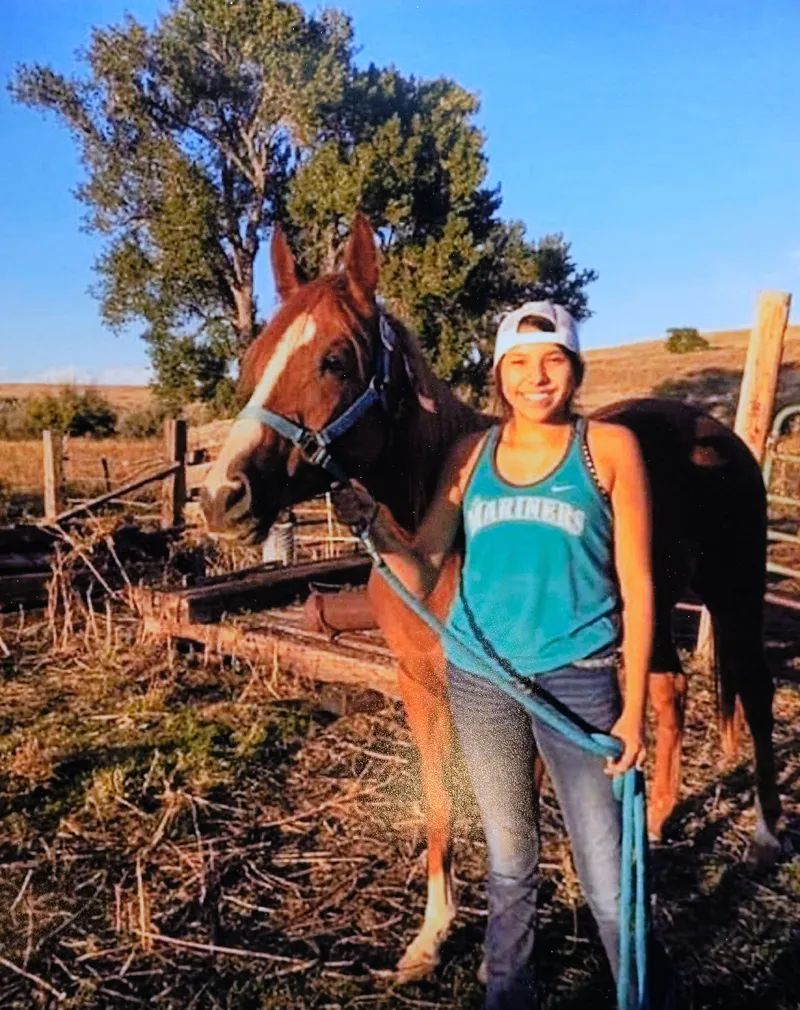
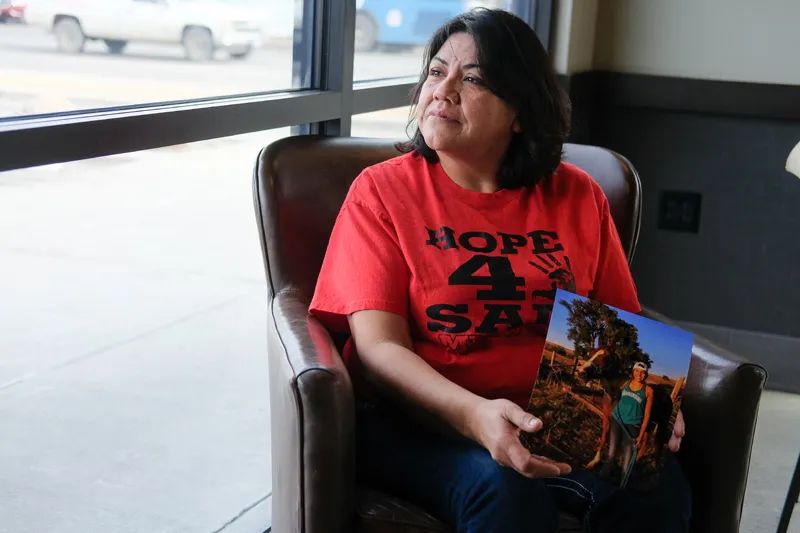
Yolanda Frasier was one of those who had to shore up her strength. Yolanda is the grandmother of Kaysera Stops Pretty Places, an 18-year-old girl whose death underscored the urgent need to confront the crisis of missing and murdered indigenous people. No one has been charged with murder in Kaysera’s case and early on, Yolanda says, a lack of reporting by law enforcement stole valuable time from her search. The case ignited something within her.
“I felt betrayed by our system,” she says. “At times, I get really angry. I feel that anger and then I say, ‘OK, what can we do? What can we change?’”
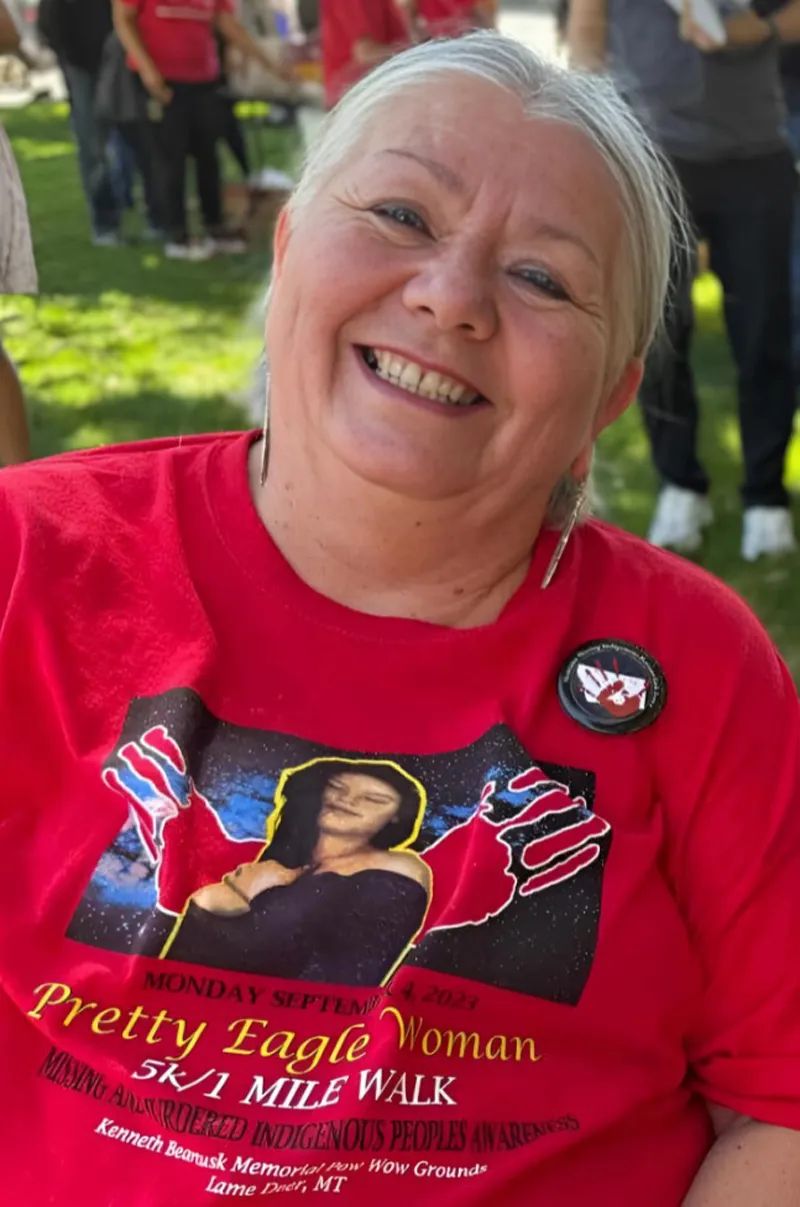
That’s why she’s now standing at the helm of the Pretty Eagle Woman Resources, a nonprofit designed to advocate for and support the families of missing and murdered indigenous people. She started the organization in 2022. Cheryl Horn also sits on the nonprofit’s board.
Yolanda says the mission is to provide advocacy for MMIP families. It might be providing a banner for that family to honor their loved one at a march. It might be a gas card to help them get to a court hearing. It might mean a letter-writing campaign to call for stiff penalties when a case is charged in court. And then, there is the Red Healing Teepee that Yolanda raises at marches, awareness events and even on courthouse lawns when a suspect heads to court.
“It’s not only symbolic, but it is ceremonial for our families because we smudge and pray,” Yolanda says. “And, it carries the hands of their loved ones, their handprints.”
Yolanda plans to raise the teepee on April 20th when the man charged in connection with Selena’s case goes to trial. Robert Alvin Morning-Bromley III was charged with criminal endangerment for putting Selena at significant risk of death. He allegedly left Selena at a rest stop even though she wasn’t dressed properly for the cold. The felony charge carries a maximum sentence of 10 years.
It’s been a long time coming, Cheryl says.
“I can’t believe six years later we are actually going to trial for Selena. Because you know, no matter what comes out of it, it shows everybody else that justice can move along,” she says. “I’m just crossing my fingers that they don’t try to plea bargain. That is the worst thing you can do to a family. We want to know. We want him to say what happened.”
While Yolanda is focused on family advocacy and pushing legislation to mandate investigative protocols in MMIP cases, Cheryl has a different focus. She cites the gains that have been made making sure every Montana tribe received search-and-rescue training. She shares how the MMIP Advisory Council recently launched its own license plate to help raise funds. And, she applauds the MMIP database, where cases are constantly monitored. Cheryl says now it’s time to put on events to get MMIP families in the same room to help them heal.
“We can’t change the bad, but we can try to get them out of that bad space,” Cheryl says. “We still need to check in on that mother, that sister and that daughter and make sure they are OK and keep encouraging them.”