
All about the animals
Triniti Halverson’s hard work and resilience keeps YVAS afloat
Staff at the Yellowstone Valley Animal Shelter never expected to make headline news on September 10th of last year. But that’s exactly what happened, when an evidence burn in the shelter’s incinerator spewed meth-laced smoke throughout the building. Not only did the fumes put 74 animals at risk but the drug-tainted smog sent 14 employees to the hospital and propelled them into a future they could never have imagined.
Those were the headlines immediately after the crisis. But as the days, weeks and months ticked by, shelter staff have dealt with the never-ending aftermath. Worn down by the multitude of extra tasks and inconveniences, some expressed burn out. In early January, as they prepared to move once again, they shared their stories of the event that altered their workplace, severed their social connections and required of them just about every ounce of energy and adaptability they could muster.
One person likened the initial crisis to the ravages of floodwaters.
“Now the flood waters have receded, but we’re not even close to being settled,” says YVAS director Triniti Halverson, elaborating on that metaphor. “We’re still dealing with the aftermath.”
Triniti gushed with praise for the staff who put the animals first and gave their all to keep the shelter functioning.
“I am so proud,” she says. “Their creativity and problem-solving has been incredible.”
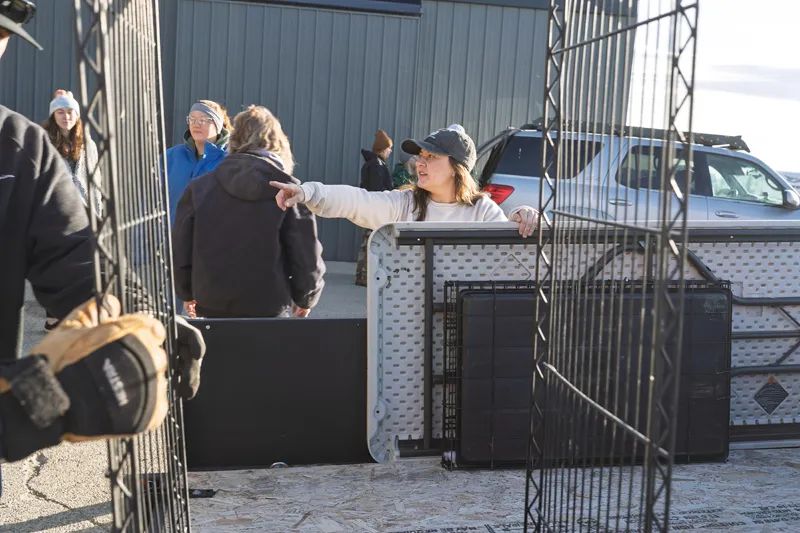
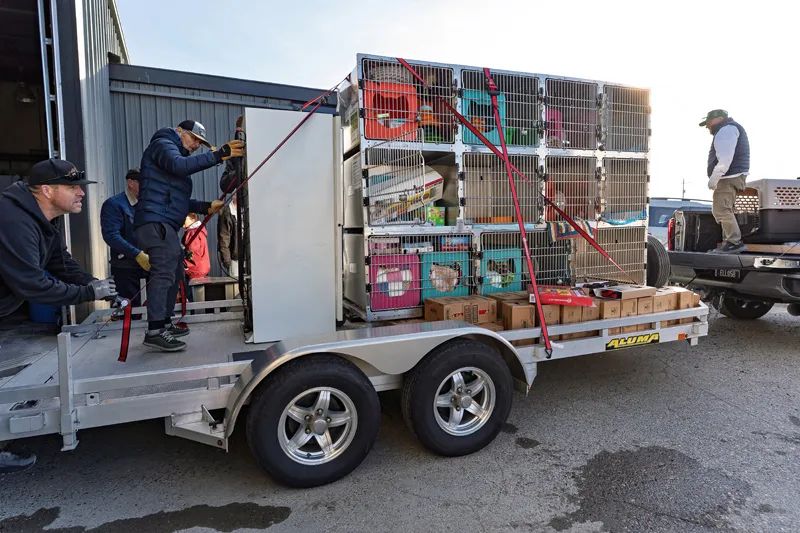
Four months after the initial crisis, the shelter’s services were spread across four different locations from West Billings to Worden. Not only were animals, equipment and supplies scattered, but staff that once thrived on working together were suddenly separated and adrift.
“Getting under one roof again is huge for staff morale — to feel like a team again,” one employee says.
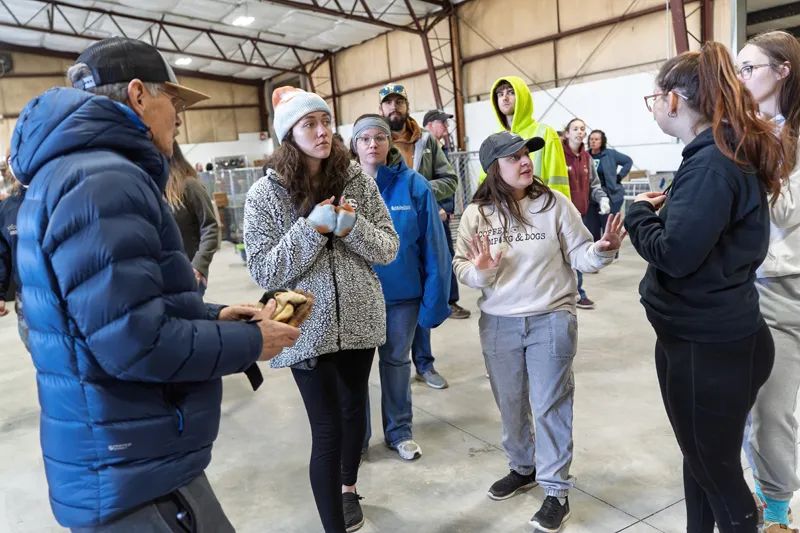
They’d already relocated the animals three times and were poised to move to their new home at 5056 Jellison Road when Triniti and her employees, who spoke on the condition of anonymity, described the challenges they’d faced.
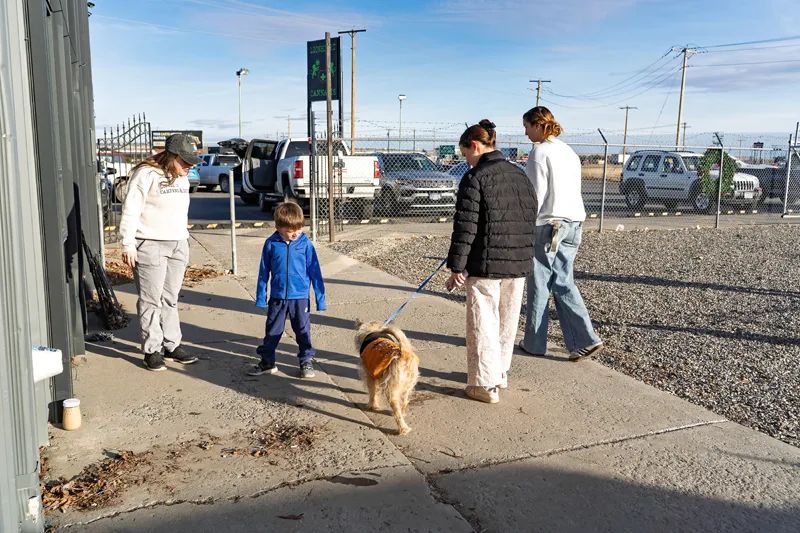
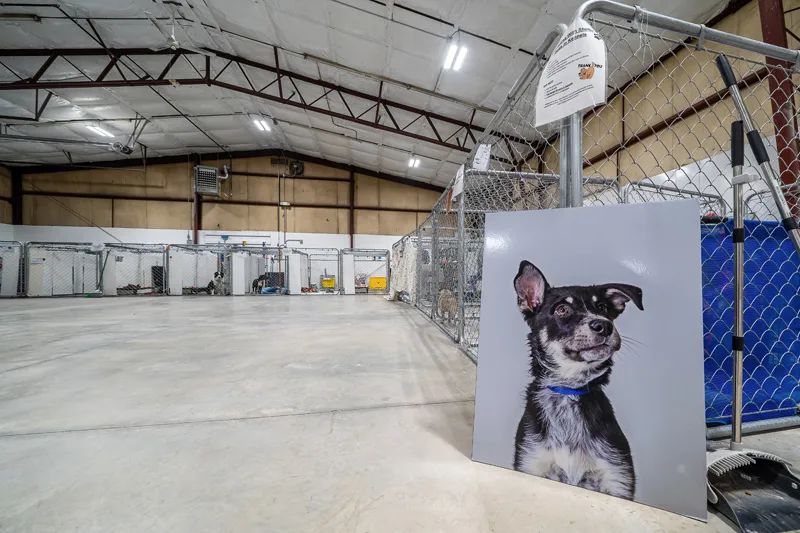
In early January, they were still working out of a large garage at Lionheart Cannabis, an active cannabis dispensary. A tour of the space yanked at one’s heartstrings and bombarded one’s ears. In what appeared to be a “warehouse full of dog crates,” nonstop barking — measured at 80 decibels — bounced off the concrete floors and echoed off steel garage doors. The dogs that once enjoyed oversized kennels and outdoor playgroups at the former facility were now restricted to small wire crates, their only privacy provided by a towel draped over them.
“The dogs are over-stimulated,” one employee says. “They have no space to get away if they have an accident. They have no place to go if they’re scared by the noise. It’s a circle. They just feed off each other.”
It’s little surprise that the nonstop cacophony stressed the cats — located only a few yards away — and sent them cringing into the corners of their cages.
Just witnessing the effects on their charges has, in turn, deeply impacted staff and volunteers alike.
“We were one of the top shelters in the nation, not just Montana,” Triniti says. “Now we’re functioning out of a garage. Our standard of care is so high. It’s hard to be skilled in a way of helping, and it’s super taxing when you cannot. You feel so debilitated, so helpless.”
YVAS was incredibly appreciative for the temporary digs offered by Lionheart at no charge and almost immediately after the incident. But the space was dimly lit, and they relied on space heaters to combat the constant chill. The clincher, however, was the lack of running water.
“We literally didn’t have indoor plumbing,” Triniti says.
So, why didn’t YVAS return to the city-owned facility that had served as its headquarters for more than 15 years?
“My board isn’t willing to put us there,” Triniti says. “I have to be a good steward of my donors’ money, my staff’s welfare and the animals’ health. I did not make this decision in a vacuum.”
As staff described the event that turned their lives upside down, they recalled breathing the toxic smoke that sent them to local hospitals where they spent several hours in hyperbaric oxygen chambers. As if that weren’t enough trauma, as soon as they were released, they bee-lined back to the shelter. It was after midnight, but they needed to care for the animals.
“There is no pause option when you’re caring for 75 animals,” Triniti says. “The first day was insane. We evacuated a majority of the animals, all before knowing what was being incinerated.”
The animals were moved to three different locations. The shelter cats went to YVAS’ separate Learning Center on Grand Avenue and the dogs were all moved to outdoor pens.
“We felt being outside at night was better than being in there,” Triniti says. Those animals in need of medical care were transported to Trailhead Veterinary Services, a brand-new clinic that had opened — just that week — by a former YVAS employee.
But their most pressing concern was a baker’s dozen of young kittens that were being treated for ringworm.
“They were the first exposure,” Triniti says.
Overnight, the Heart of the Valley Rescue in Bozeman offered to take them in.
“We drove them to Bozeman,” one employee recalled. “Oh, they looked so scrappy.”
(Incidentally, all 13 were cleared of ringworm in early January.)
As employees scrambled to gather what was needed, all the pet food and blankets had to be trashed. They crammed their cars full of supplies, much of which is still stashed in homes and other spots around Billings.
When the source of the toxic smoke was identified, staff were banned from reentering the facility. The only one allowed in was the staff veterinarian, who donned full PPE gear to retrieve much-needed meds.
“The anxiety meds, that was the big one,” one employee says. “We really needed those.”
But so much was left behind. From the X-ray machine to computers to vet records, the list would boggle the mind.
Almost immediately, one crew got to work decontaminating animals — scrubbing dogs in cold water with Dawn dish soap — and wiping down cats as best they could. “It was 50 degrees and my pants were soaked,” one says. “Try bathing a cat,” another quips. Meanwhile, others frantically began searching for safe havens for the dogs and cats.
“While different crews were trying to decide where to go and what to do, our number one goal was to get everything adopted, to get them stabilized in foster homes or clinics,” Triniti says.
Once decontaminated, the animals were ready to be placed in foster homes. That first day, fosters stepped up and took in almost every animal, Triniti says.
But their work barely missed a beat. Barely a week after the crisis, YVAS held an adoption at Canyon Creek Brewing. The very next weekend, they held a spay/neuter clinic.
As the enormity of their task became apparent, YVAS saw no option but to shut down all intakes. The decision crushed Triniti and her employees. Over the same 10-day period in previous years they would have taken in nearly 200 animals.
“It was extremely frustrating for us,” one employee says. “We would see animals on Facebook and pray that they made it home.”
The relocation to Lionheart altered just about every protocol that was part of the staff’s norm. Bowls once cleaned in sinks with warm water were being washed outside — whatever the weather — using hoses. Feces that were previously cleaned up with scoopers had to be picked up by hand. Staff transported animals, in their own cars, from one site to another for medical attention, access that was previously just a few steps across the hall.
Much of the paperwork and vet records, once stored in a central location, got dispersed. Adoptions that previously took 15 minutes, were taking twice as long because they were down from three computers to one dependable computer — forcing staff to log adoptions by hand and enter them into the computer as time allowed.
Meanwhile, staff faced lines of potential adopters that grew out of sorts as they waited.
Even establishing a serviceable internet connection proved so difficult that staff could only access voice mails via their email.
And then there was the day they had a parvo scare.
“It ended up being a false alarm, but just mentally doing the gymnastics, trying to figure out how to deal with it….” one employee recalls, her voice trailing off.
While her employees were trying to adapt, Triniti was trying to unsnarl the complexities of government agencies.
“The process the government needs to go through in an emergency is incredibly slow,” she says.
Norma Buchanan, who chairs YVAS’ fundraising Community Leadership Team, was amazed at how the staff adapted. “We take for granted the things that we have in our daily workplace,” she says, things that the YVAS staff didn’t have. And yet, they were willing to put up with such conditions.
“Their devotion to the animals is profound,” Norma says. “I marvel at these young people. Obviously, they have very deeply kind souls.”
Most of the staff have come to tolerate their new “normal” — but barely. Others, too distraught by upheaval, have left.
“We’re trying our hardest,” one says. “But it’s still uncertain. That’s the worst part — not knowing what will happen next. I miss being in my happy little rut.”
Another employee expressed a sense of loss for the place that had served as her work home for nearly 15 years.
“I started working at the shelter when I was 21,” she says. “It was the place where I learned my purpose — the building that raised me. If I had a bad day, I’d go to the shelter, go pet a dog.”
Since the crisis, she’s been working on her laptop out of a coffee shop — isolated from the place and people who had made up her world.
Yet, for all the negatives, the dire situation brought out so many positives. Not only did Lionheart open its space to YVAS, but the business held a fundraiser in support. It even purchased additional space heaters to ward off the chill, Triniti says. Area clinics donated vaccines and much-needed disinfectant while volunteers stepped up to do laundry — five to six 300-pound loads, two or three times a week — the services of which were offered gratis by Spin Fresh Laundry.
The outpouring of support reminded Triniti of the Mr. Rogers book that she read to her 5-year-old son.
“It says ‘look for the helpers,’” she says. “There were so many people who came to our aid — businesses and individuals. We wouldn’t have been able to be this resilient without that help.”
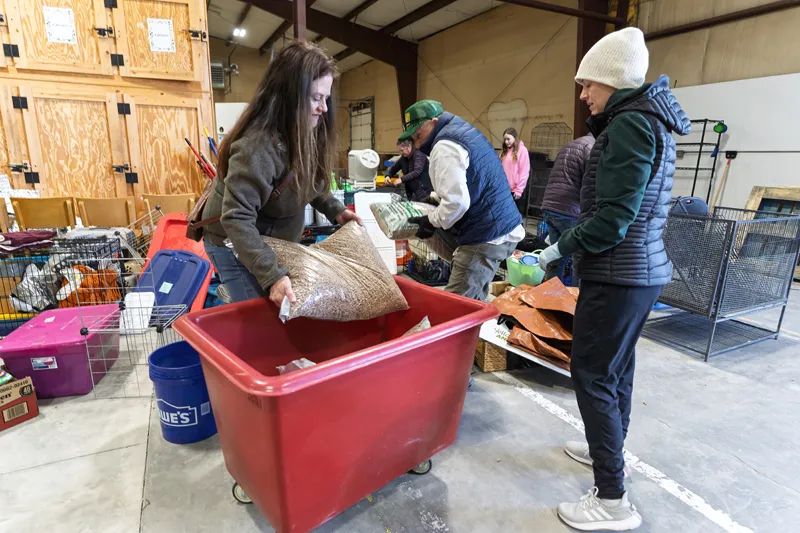
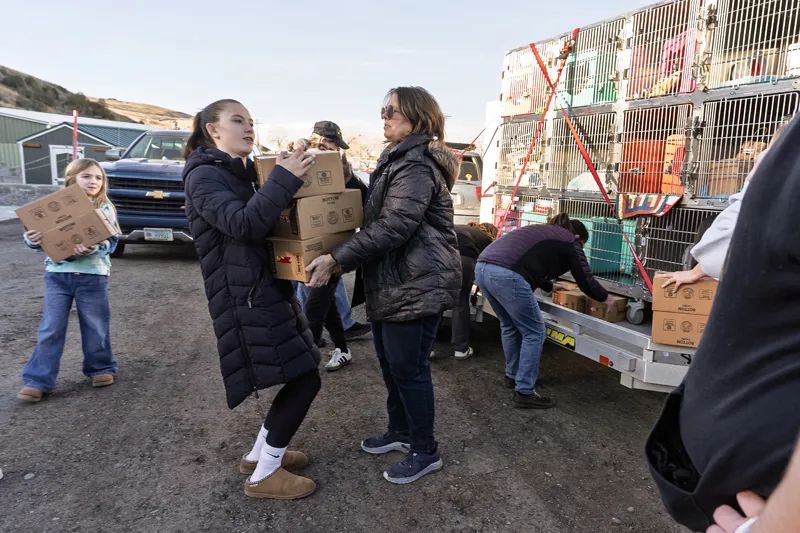
In early January, volunteers and staff made yet another herculean push as they moved to the Jellison location.
“Most people can’t move a house in four months,” Triniti says. “We’ve moved this three times.”
Yet, they still envision one last move — someday — into a brand-new shelter. They were already two years into a capital campaign when the crisis made their goal that much more urgent.
“We’re more motivated now than we ever were to get back to the state-of-the-art shelter that matches our level of care,” Trinity says.
Eye On The Future
Capital campaign and plans for a new facility surge forward
Norma Buchanan, chair of YVAS’ fundraising Community Leadership Team, saw a dire need for a new facility long before the incident that prompted YVAS to evacuate the city-owned shelter.
“The temporary setback has not made any setback in our support,” Norma says. “That just gives us energy.”
In fact, the heightened sense of urgency has significantly increased donor response. As of January, the group was nearing $7 million in funds raised — close to half its goal.
“It just makes me realize the incredible generosity of our community,” Norma said. “I’m just in awe. I have no words.”
To donate to YVAS, go to YVAS.org or mail to PO Box 20920, Billings, MT, 59104.
EDITOR’S NOTE: The Department of Environmental Quality and the Occupational Safety and Health Administration continue its investigations to determine the potential health impacts of this event. For this reason, employees were urged not to share their names in this piece.