

Transforming Trauma Into Strength
One Breath, One Punch, One Sister at a Time
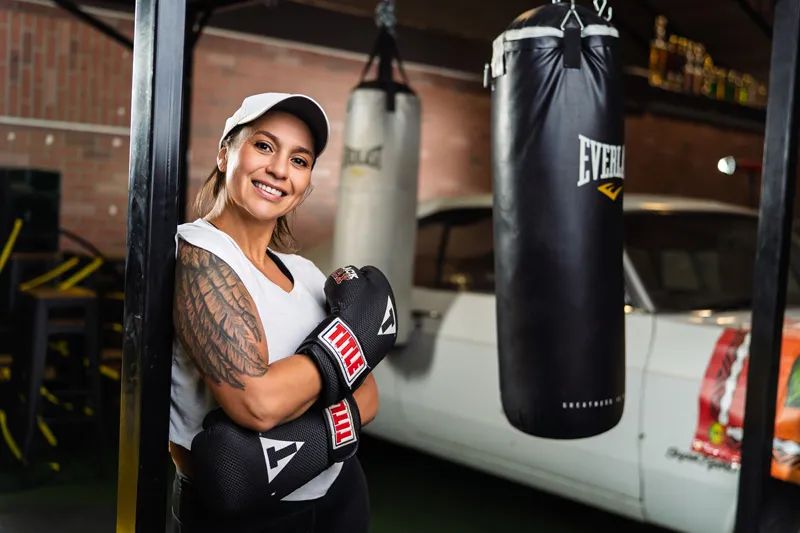
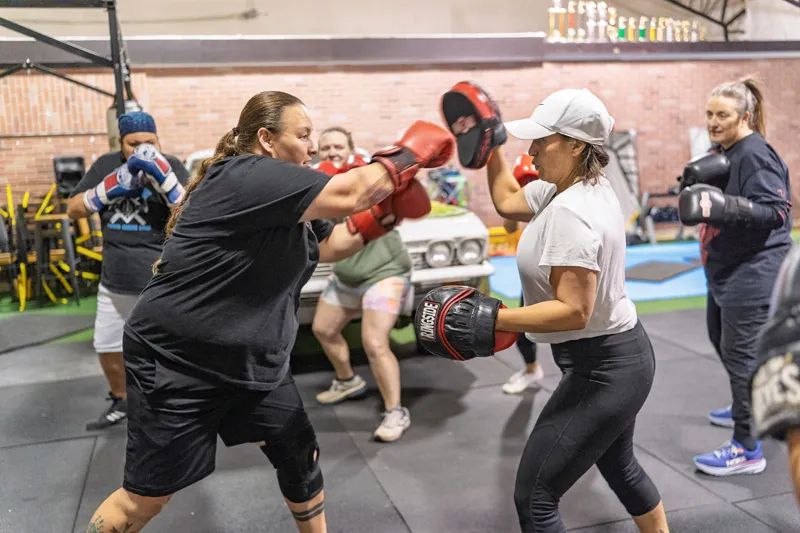
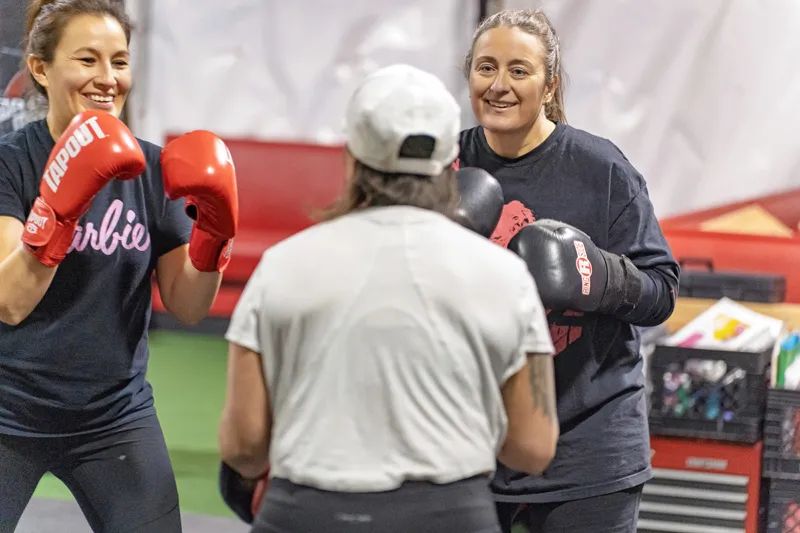
Several times a week, Wamnee Ereaux, or “Eagle” as many call her, slides on her Title Classic boxing gloves and stands in the center of a circle of women who are all looking to get rid of a little pent-up energy. As the sound of gloves snapping against pads echoes through the small southwest Billings gym, Wamnee isn’t helping these women perfect an upper cut or left hook, she’s helping them build internal strength and a sisterhood.
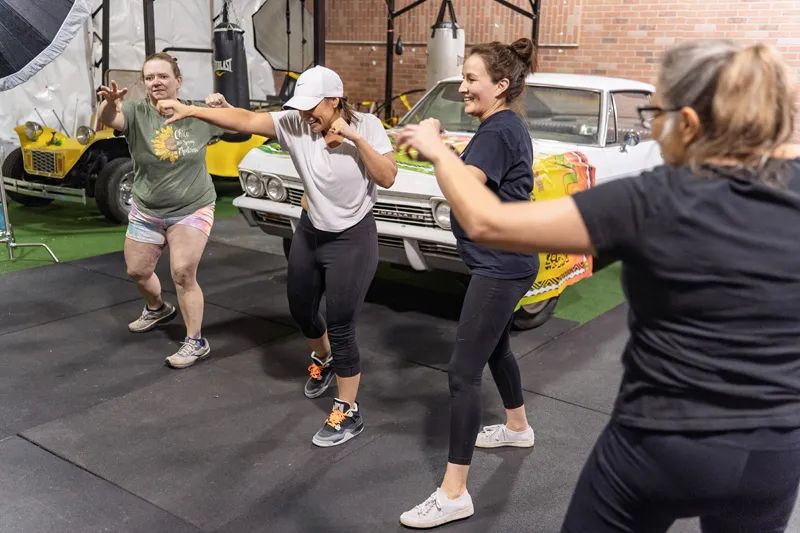
“The neurons are firing right now,” Wamnee shouts with a laugh as she urges her ladies to keep those one-two punches coming. She shares how bilateral movements calm the nervous system, helping to take these women out of a fight-or-flight response.
For nearly four years, Wamnee has led WahineWea Life and Fitness, which means “Woman for Woman” in both Hawaiian and Lakota, a nod to her family’s mixed heritage. Here, the women Wamnee coaches work on breath and movement and, many times, deal with the trauma that’s been gripping them for years.
“If you can help people feel safe and rewire the brain,” she says with an endearing smile, “you can move mountains.”
Wamnee found out in her teenage years how therapeutic boxing can be.
“Growing up on a reservation, you fight about it first and you talk about it later,” she says of her childhood on the Fort Belknap reservation in north-central Montana. When her family moved to the outskirts of Tucson, Arizona, Wamnee found herself as the only Native American in an all-white high school.
“I was getting jumped,” she says. “The girls were coming at me but, mind you, punching was not a problem for me.”
As a standout basketball player, she remembers her counselor telling her, “If you go to anger-management classes, you can stay on the team.”
Her anger-management counselor pushed her into a boxing gym.
“I think she hoped I got beat up and just didn’t want to fight anymore,” Wamnee says with a laugh. Truth be told, her first time in the ring, “I really got it handed to me from a professional fighter. She laid into me pretty hard.” But instead of backing down, the experience ignited something. “I told the coach, ‘Let me try again.’ I fell in love with it on day one.”
It took time for her to understand what kept drawing her back.
“If you experience domestic violence or witness traumatizing situations, you are going to have that pent-up trauma. It’s going to be there,” Wamnee says of the after-effects of her childhood. “There’s a book that I love. It’s called ‘The Body Keeps Score,’ and it really does — whether you are aware of it or not.”
Slowly, she returned to the ring, not with fury, but with humility. She learned to step back, breathe and reassess before throwing the next punch. It was a much-needed lesson in self-control; one she would carry far beyond the gym.
As Wamnee’s confidence grew, so did her desire to give others that same feeling. She ended up volunteering as a coach, teaching youngsters the power of boxing.
“That was my way of giving back,” she says. “My coach had a nonprofit, teaching inner-city kids in the barrio on the south side of Tucson.”
Her own skills kept sharpening. Six years into training, she was preparing for a national championship on the Golden Gloves amateur circuit when her coach told her something she never forgot: “It’s never going to be about you winning a championship. It’s going to be a platform for you. You are going to use boxing as a platform.”
In college, everything clicked during Wamnee’s first psychology class. “The lights came on,” she says. She became fascinated by how the mind and body heal together. She eventually earned both her undergraduate degree and a master’s degree in mental health counseling — a combination that would ultimately shape her future.
“In 2019, my tribe called a state of emergency for suicide,” she says. She came back to the Fort Belknap reservation for a weekend boxing workshop for kids and ended up staying.
“We had 40 kids in a little library in Hays, Montana,” she says. “I met with council that next Monday and asked for a building to put together a boxing program there because there was a need, and we showed them the need.”
Today, Wamnee has no idea how many lives she’s touched with her boxing gloves. For the past three years, she’s gathered to teach up to three times a week, inviting women to join her on the journey. Her therapeutic boxing classes are free of charge and the only advertising has been word of mouth.
“Somehow, they find us,” she says. “We have so many women from different walks of life who have their own set of experiences and again, while this is a very similar experience, they will all tell you a different version of how it helps them.”
Thirty-five-year-old Alahna Rowland is one of those women. Her first class felt like crossing a threshold she’d been searching for. “The moment I started, I felt like I belonged,” she says. She’d spent years trying to heal the wounds after growing up in abusive foster homes.
“This has given me confidence. It’s given me the urge to do something about my trauma, not just hide from it,” Alahna says. “Working with Wamnee, I’ve learned to control my breathing. I’ve learned to ground myself.”
Some days, she still hears the voice that tries to tear her down. “But now I have a new voice that’s louder,” she says. “I feel like I’m getting on the right path. That’s why I love this place.”
Angie Pollock, another regular in the gym, comes for many of the same reasons. “I used to be a blackout fighter,” she admits. “One of my heroes was murdered in a fistfight, and I swore off fighting. It was a battle to keep myself from going to that edge of rage.” With Wamnee’s guidance, she’s learning control.
And Wamnee sits back and celebrates every one of these steps forward.
“I know now. This is my purpose here on earth,” Wamnee says. She dreams one day of expanding her program with regular music and art therapy classes. She’d also love to develop a digital platform that every woman across the country could log into where they can learn the breathwork of boxing. She knows when you match breathwork with activity, magic happens.
“It empowers me to watch women grow,” she says.
And, while some of the women she teaches come and go, she makes sure each one of them knows that they will always be welcome back to this healing space. With a smile she says, “You will always have a little tribe here waiting for you.”


