
“We Can Do Hard Things”
An accident took Karsyn Hornby’s leg, but gave her a calling to help others
As a mom of an infant baby girl named Ari and a 3-1/2-year-old son named Dax, Karsyn Hornby has to be quick on her feet. There have been times when she’s picked up her son from pre-school that she’s been innocently reminded by her son’s school friends that her feet look a little different.
“Some of the kids will say, ‘Look at that robot leg,’ or ‘Look at the girl with one leg,’ and my son is just standing there and will say, ‘This is my mom. She got hit by a car. She has one leg,’” Karsyn says, proud of her son’s response. “He doesn’t understand yet that maybe it makes my life a little different, but I think he’ll appreciate that as he gets a little older. I want him to know that if things happen in your life, you have the skills to get through it.”
Having the skills is something Karsyn regularly preaches and has been one of the most powerful lessons learned over the last 18 years.
2008. It was the summer before Karsyn’s freshman year in high school. Living in the small town of Buffalo, Wyoming, Karsyn and three of her friends got a wild hair to take Karsyn’s mom’s car and hit the city’s pool for some ice cream and a little fun. Even though they didn’t have permission to take the car, one of the girls was 15 and could drive.
“My other friend, who was 13, asked if she could drive,” Karsyn says, adding that while she screamed ‘no’ in her head, she didn’t say a word. “She hopped in the driver’s seat and drove home.” When it came time to pull her mom’s car into the garage, Karsyn got out to try to direct her friend into her mom’s parking spot. She knew if it wasn’t parked just right, they’d get caught.
“She tapped the gas and the car lurched forward, hit me and crushed me and my leg into a wood bench we had in the garage. The car pinned me against the wall and completely smashed my leg,” Karsyn says. “My bone was sticking out. I almost bled-out in the garage.”
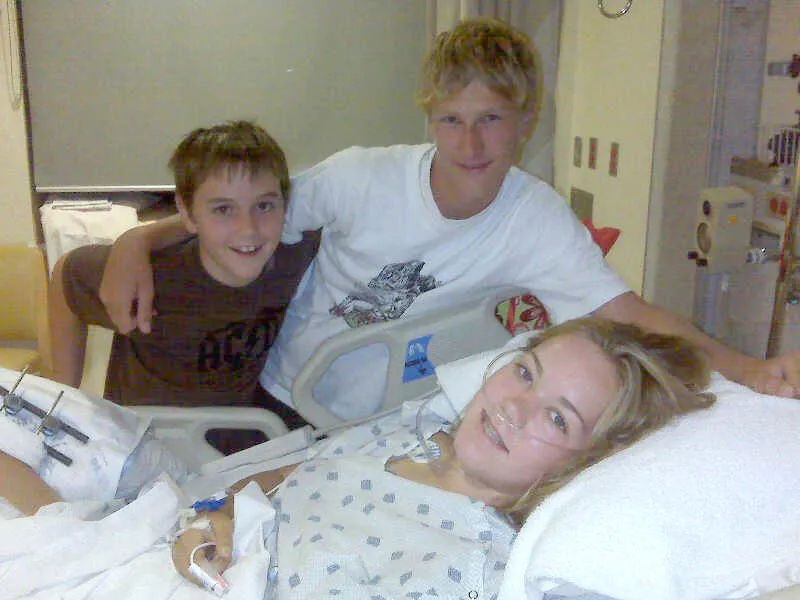
Karsyn was airlifted to the hospital in Casper for surgery.
“They initially saved my limb. They harvested a vein from my leg and used it to try to get blood flow because the nerve was still intact. They waited three days,” Karsyn says. “It ended up not working.”
What resulted was two more surgeries. The last one was defining.
“I remember waking up,” Karsyn says. “I could feel how light my leg was. I moved in the bed and I remember saying, ‘It’s gone.’ The weight wasn’t there.”
While she initially processed the loss of her leg well, within months, she slipped into a deep depression.
“I was very hateful, very dark,” Karsyn says of her 13-year-old self. “I would have ideation about suicide. I never planned anything, but I thought about it often.”
When she started to own her part in her accident, her life started to shift.
“I reinvented myself,” Karsyn says simply. She started to focus on the things she could do instead of the things she couldn’t. She got attached to mantras and quotes and found herself plastering inspirational Post-it notes everywhere. She still clings to a Marianne Williamson quote which in part reads, “As we let our own light shine, we unconsciously give other people permission to do the same.” Karsyn says, “I think I related to that because I wanted to hide myself a lot and that only brought more pain.”
Within time, she started to speak publicly about her experience, sharing with driver’s education students, high school crowds and anyone else who needed a dose of inspiration. She’s given talks, she guesses, upwards of 50 times. Each time proved a little more therapeutic.
“I think ownership is a really big value of mine,” Karsyn says. “It was embarrassing and difficult, but I was able to say, I can own my action in this.”
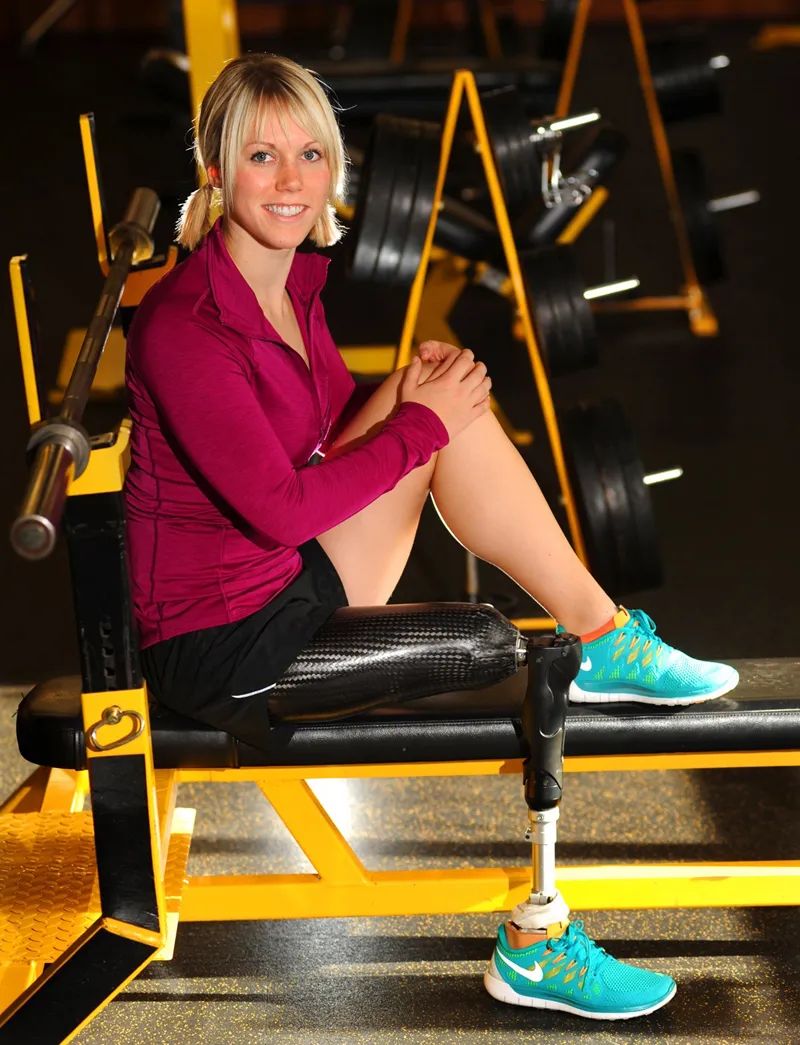
Three years after her accident, Karsyn got a job at the local gym working the front desk. It lit a fire in her for fitness. When she moved to Billings for college, she found a job at a gym here. The decision completely changed her career focus. The owner of the fitness facility saw something in Karsyn and asked if she ever thought about becoming a personal trainer. By the time she turned 18, she was certified and fell in love with the job.
“Sometimes you just need this gentle suggestion from someone and it can change your whole life,” Karsyn says.
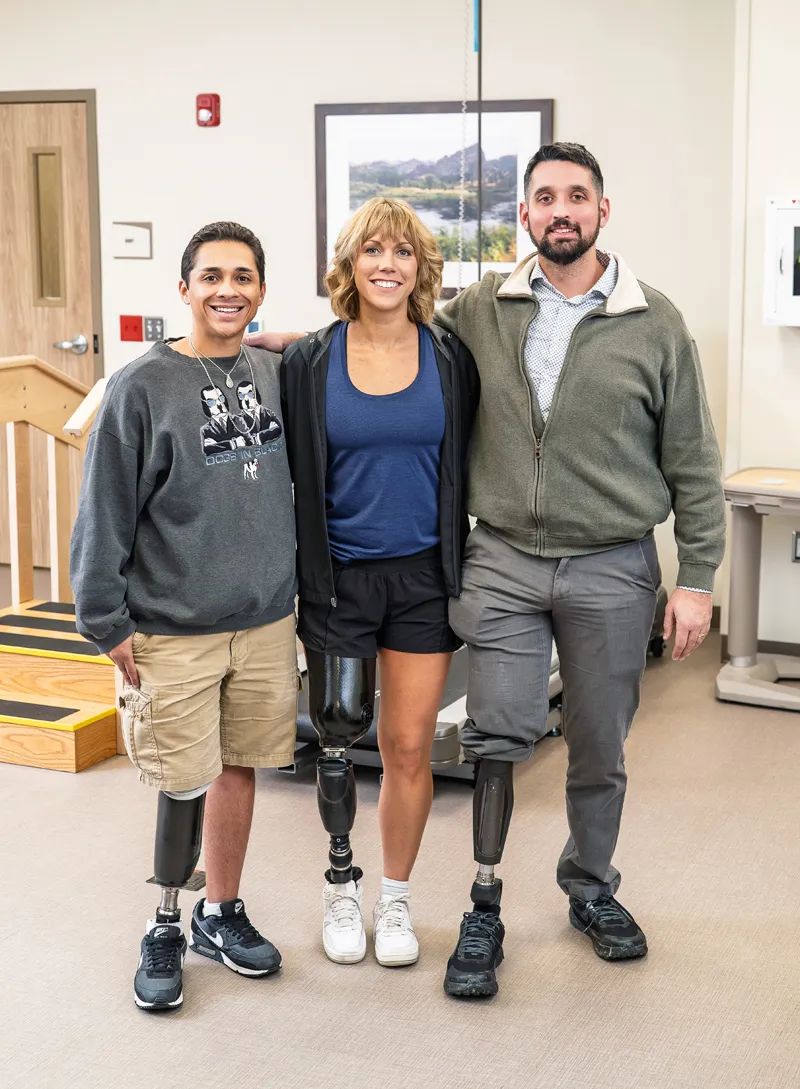
Kelly Stokes, Karsyn and Andrew Walker
College brought her to Montana State University Billings where she earned a degree in health and human performance. She’d eventually go on to earn a master’s of science in athletic training and began teaching at the university. While she spent years as a personal trainer, for the past two she’s worked with veterans as a health and wellness coach through the Veteran’s Administration.
“I'm not a veteran and I would never claim to go through those hardships. However, I think I’ve experienced something really hard that I had to grieve through,” Karsyn says. “Sometimes we can just connect on that level — the grief in me recognizes the grief you’re experiencing. Let’s use this in the path forward.”
While she’s impacting veterans on a daily basis, she’s earned a reputation for being “the one to call” when someone finds themselves a new amputee.
“She came to visit me right out of the hospital,” says Andrew Walker, who lost his leg a little over a year ago.
“It was a strep infection that started in my right heel,” he says, recounting the events of Christmas Eve 2024. “I started to notice it. I didn’t have a fever,” he says, adding the infection was so fast moving, that by Christmas day, he was in the hospital, intubated and clinging to life.
“It was a rough time,” he says, spending weeks in the intensive care unit, much of it unconscious. “I almost died and I lost my right leg. I had to figure out how to be a dad and go back to work and be active again,” he says, adding that he had zero preparation for what life was throwing at him.
When he finally went home, he found himself in a deep depression, hobbling around his home with a walker.
“You go home and you realize that it’s really not ever going to be the same,” Andrew says. That’s tough. It’s a tough reality check.”
That’s when Karsyn paid him a visit.
“She's really helped me process that trauma and move forward,” Andrew says. Karsyn showed him how to take his new prosthetic leg on and off. She’s been there for him when questions arose.
“One thing that stuck with me was that this is going to be hard, but she said, ‘it’s okay, because we can do hard,’” Andrew says with emotion. “It was the acknowledgment that, yes, it’s going to be difficult, but you can do it. And, this was coming from someone who has done it.”
A year later and it’s a whole new world for Andrew. A former endurance runner, over the summer he was fitted with a running blade and has started to learn the mechanics of adaptive running.
“The other day, I ran for three minutes straight and I was like, ‘Hell yeah!’” Andrew says with a laugh. He’s got his sights set on a mountain race called The Rut, a six-mile course that is both up and down hill. While he did the 18-mile version twice before he lost his leg, today, he’s content. “Just finishing will be enough,” Andrew says.
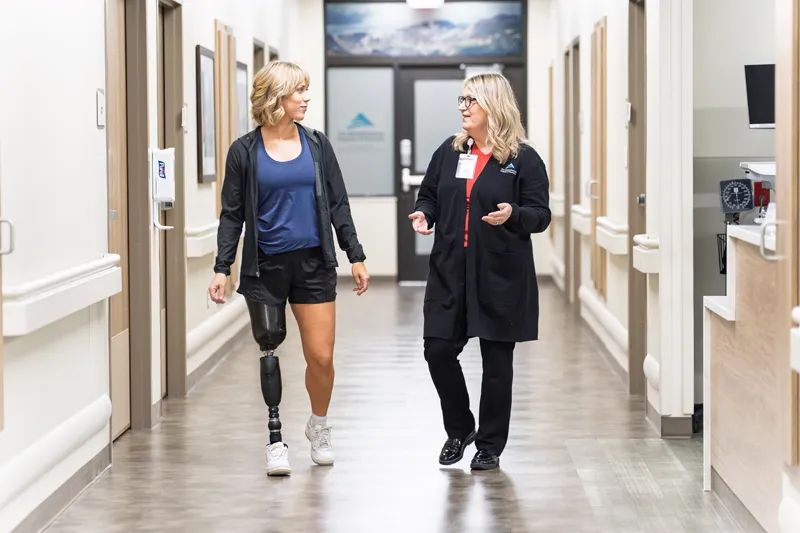
You could say Andrew is following in Karsyn’s footsteps in trying to inspire fellow amputees. Together, they lead a relatively new amputee support group each month at the Rehabilitation Hospital of Montana in Billings.
“She has a calm and quiet way about her,” says Lynn Ratcliff, who works as the hospital’s Director of Business Development. She’d heard Karsyn’s name pop up time and time again as someone who was an ally for new amputees. So, when the opportunity arose to look for a leader of the support group, Lynn knew in her gut that Karsyn was a perfect fit for the role.
“She has such a positive approach and attitude about her life and how she has been able to thrive through everything that she’s gone through after a traumatic amputation,” Lynn says. “The inspiration she shares with others is just phenomenal.”
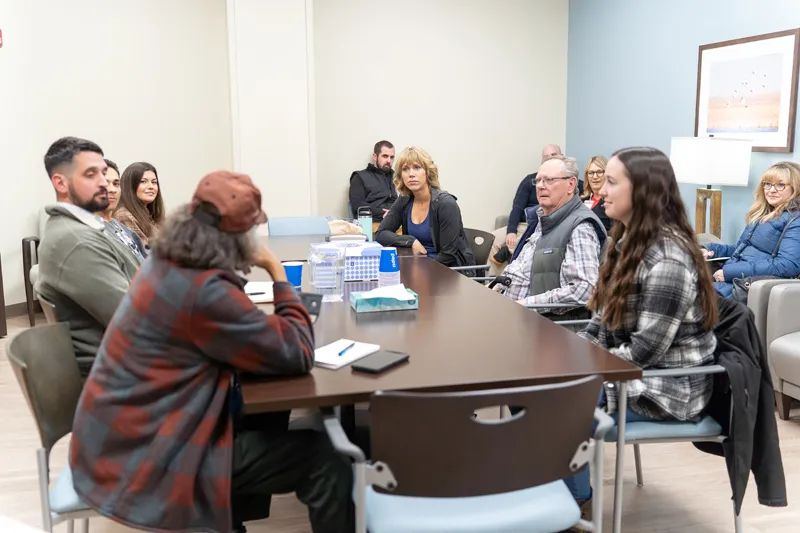
On a recent Monday evening, a half-dozen members of that community met to connect and bounce things off each other.
The group chatted about comfortable sleep positions, how to get through the airport with a prosthetic, and even more obscure questions like when they dream, do they have both limbs? Each question brought thought-provoking answers, colorful stories and, most importantly, bonding time.
“Has your nerve pain gone away?” one member asks. Phantom pain, when nerves continue to try to fire to the missing limb, can be debilitating and it is often the worst right after an amputation.
“I have times when I am just sitting there and it feels like my foot is exploding,” says Kelly Stokes. He suffered an accident seven years ago at work but elected to amputate his leg five years ago after severe pain crushed his quality of life.
“I was run over by a forklift,” Kelly says of his accident. It left him with nine broken bones from the knee down, a ruptured Achilles tendon, and a severely dislocated ankle. He ended up getting sepsis and doctors were forced to remove much of his injured calf.
“On a day-to-day basis, my pain was probably anywhere from a six or a seven and then, I would have spikes of 8, 9 and 10 almost daily, especially at night,” he says. His sleep was nonexistent. “I thought, ‘I don’t want to live the rest of my life like this.’”
That’s when his physical therapist put him in touch with Karsyn.
“She told me, ‘Hey, I know this girl and she is an above-the-knee amputee,” Kelly says. She kicks butt and does anything and everything that she wants to. I think it would be good for you to get in touch.”
He was amazed at Karsyn’s attitude and ability. “When I first started talking with her, she was doing yoga and Pilates. She was hiking and skiing,” Kelly says. “I thought, well, if I do this, I don’t think it will be the end of the world. I might have to make some adjustments, but I think overall I can do better than I am now.”
He’s intensely grateful that Karsyn helped him work through his decision. After his surgery, she was there to answer questions like, do you put your leg on when you get up in the middle of the night? Or, what happens if you are on vacation and your leg breaks?
“Honestly, the words are hard to describe,” he says. “My life looks way better. I’m blessed beyond anything that I could have imagined. That mindset is 95% thanks to Karsyn.”
To sit back and watch Karsyn’s magic at work, Lynn says, has been nothing short of inspiring.
“Karsyn has helped Kelly and she’s helped Andew and she’s helped dozens of other people. I would challenge that her investment in those people is paid forward so many times,” Lynn says. “I think Karsyn greatly underestimates the impact she’s had in our amputee community and in our region. It’s significant and it’s beautiful to watch.”
Her dedication is proving to be contagious.
“That same thing Karsyn did for me, I’m trying to pay it forward to help someone else pull through that darkness a little bit,” Andrew says. “It’s a good feeling. It really is.”
When asked how she feels about the accolades, Karsyn is quick to brush it off saying she doesn’t want to take away from anyone else’s journey. She prefers to think of herself as a catalyst.
“You facilitate someone's greatness that they already had. You know that it's there and it's theirs,” Karsyn says. “I am just helping to pull on the strings. What’s going to get you to take that initial step forward.”
There have been times that Karsyn has had to take a bit of her own advice and dig deep to find that inner greatness. Ten years ago, she had to overcome a massive limb infection that had been dormant since her amputation. It brought a year of crutches and additional surgeries. She’s faced comfort issues with her prosthetic and learned pregnancy does a number on the way her prosthetic leg fits. She takes each issue in stride, is big on self-care, and chooses to focus on new challenges to keep pushing herself forward. Right now, that includes training for what’s called a HYROX competition, an event which pairs running with different functional workout stations to test strength and endurance.
“There’s an adaptive division, and that just called to me,” Karsyn says with a laugh. “I was like, ‘oh, that’s my jam!’”
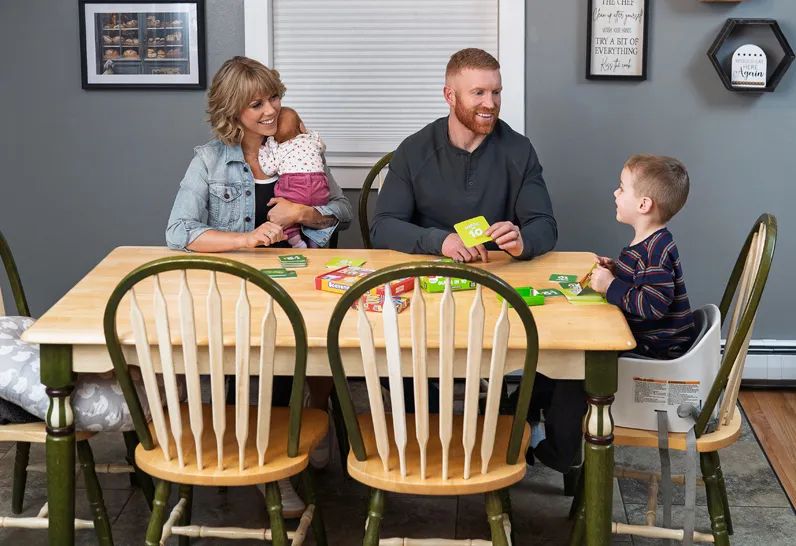
While she prides herself on showing her children that anything is possible in life, she makes sure she finds outlets to share that message with others who are in the midst of a struggle.
“I love humans,” Karsyn says. “I love connecting to people.”
Over the years, that’s meant meeting people in their hardest moments.
“I think I have a sensitivity and to not just say, ‘Oh, it’s all going to be fine.’ Instead, I say, ‘I can really empathize with that thing you are feeling. I was there. I remember it,’” Karsyn says. “Just getting in the trenches with people because you do understand it.”
She encourages others to recognize their own strength and capacity to endure, even with they’re not ready to see it yet.
“I want them to exit feeling encouraged, feeling just a little bit lighter, a little bit more positive,” she says. “I can’t make others lean into it, but I can encourage them to try.”
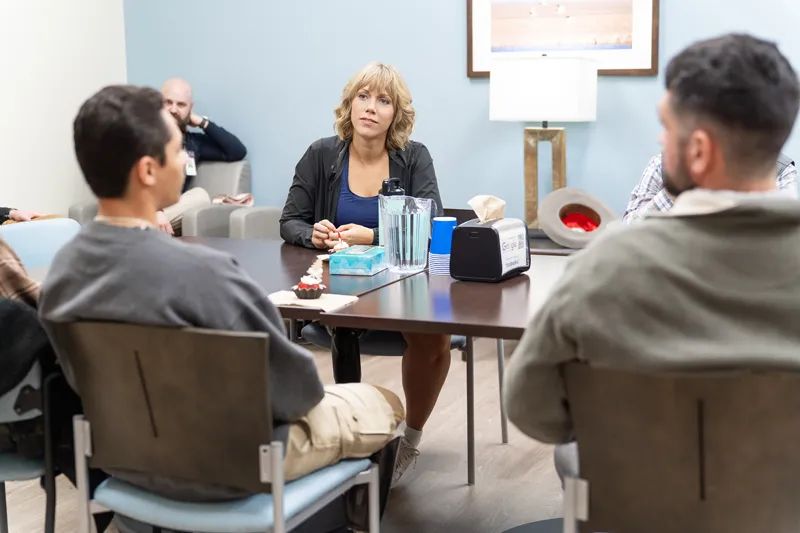
Connecting Amputees & Creating Community
The Amputee Support Group at the Rehabilitation Hospital of Montana meets every second Monday of the month at 6 p.m. The hospital is located at 3572 Hesper Road and is open to anyone who has suffered a limb loss.