
Cutting Fences
One woman’s mission to return freedom, purpose, and possibility
Last fall, Mac Vosbeck went hunting for the first time in years.
“I can’t tell you how good that felt,” he says. “I didn’t think I’d ever be able to get back out there. I spent my life hunting and I didn’t want to give it up.”
In 2009, Mac, a disabled combat Army veteran suffered a near-fatal injury in Afghanistan. It led to more than 20 neck and back surgeries. He has anchor bolts in his pelvis and rods and screws throughout his spine. It’s a miracle he can walk. Yet since he finished his deployment, he has biked, skied and enjoyed being a Montana outdoorsman.
That all changed last fall. While on a hike, Mac fell and broke one of the rods in his back. After yet another spinal operation, he watched his hunting plans disappear.
That’s when he heard about the Cutting Fences Foundation and its founder, Kendra Lewis.
“Every time I visit with a new client, like Mac, I gain a perspective of the things that are easy to take for granted.” Kendra says. “What never ceases to amaze me is the resilience of people like him.”
Kendra started the Cutting Fences Foundation (CFF) just before she graduated from Rocky Mountain College four years ago with a doctorate in occupational therapy. Since then, the foundation has helped dozens of Montana farmers, ranchers and veterans living with disabilities by providing them with adaptive equipment and assistive technology.
Kendra grew up in the rural town of Geraldine in a home with three older brothers. From a young age, her parents modeled lending a hand to those in need. The family-run fuel and feed store, in addition to being part of the ranching community, provided plenty of opportunities to witness this kind of giving.
“That’s what sparked a desire in me to meet the needs of a community,” Kendra says. “My dad was always figuring out how to help someone that needed help and I loved that in him.”
Following in that path, all through high school and college, Kendra spent time coaching for Special Olympics.
“My mom is a person who stutters, and I watched her being discredited for her intelligence because of the way she speaks,” Kendra says. “It sparked a desire in me to somehow be an advocate for people with disabilities.”
After graduating from Montana State University with a degree in health and human performance, Kendra applied to the occupational therapy program at RMC.
“Rocky offered a program that was focused on meeting the needs of the rural and ag population,” she says. “It uniquely combined my top interests of occupational therapy and agriculture.”
An assignment by one of her professors during the COVID-19 pandemic led to another seed being planted on Kendra’s career path. Because classes were being taught online, for the first time in years Kendra was home to help during calving season.
“We were assigned several fitness challenges and one of them was a plank challenge,” she comments. “We were supposed to post a fun video of ourselves doing the challenge.”
Kendra did the challenge in her heavy canvas coveralls and winter boots — on top of the hay that had just been fed to the cows — while the cows and their newborn calves ate around her — in the middle of a snowstorm — while her brother filmed it. After viewing the video, her professor, who had no experience in the agricultural lifestyle, asked Kendra to do a presentation on what it was like growing up in rural Montana. That assignment led to her doctoral capstone project and laid the groundwork for Cutting Fences Foundation.
Wanting to delve beyond her own personal experience, Kendra reached out to friends for references. Of the names given to her, three were individuals farming and ranching while confined to a wheelchair.
“That was the light bulb moment for me,” she says. “There was no organization in our state targeting and serving this population.”
She began with a series of podcasts, called Cutting Fences Podcast, where guests shared their stories of injuries and disabilities while still managing to farm, ranch and carry on with rural life.
“It’s hard enough at times to be a farmer or rancher,” Kendra says. “The challenge of a disability adds a whole other level of difficulty. I hoped my podcasts would bring awareness, resources and, most of all, hope to those navigating similar life experiences.”
Her curiosity led her to agricultural trade shows. She spoke to as many organizations across the state as possible. At the time, she was also teaching as an adjunct professor and was newly married to her husband, Rory. As she dove deeper into the issue, it further underscored the need and led her to create the Cutting Fences Foundation (CFF), a nonprofit designed to find adaptive solutions and resources to help Montana farmers and ranchers with disabilities continue to do what they love.
Lawrence Rhone, an independent veteran’s advocate, first met Kendra at an ag conference. He immediately understood Kendra’s mission. It didn’t take much for him to accept her invitation to be a part of her new nonprofit’s board.
“I wanted to be engaged in helping CFF grow,” Lawrence says. “Kendra has so much to offer and I saw myself helping her every step of the way. We both provide inspiration and motivation to those we serve.”
Lawrence was one of Kendra’s first podcast interviews. In time, he became a mentor to her as she took steps to launch the nonprofit.
“The needs kept getting more obvious,” Kendra says. “People just want to be able to do what they love, not only people in ag, but veterans as well. We can provide resources and therapy, but ultimately if they can’t go out and check their cows or go hunting, there’s still a big barrier in their life. Access to the right adaptive equipment can help to eliminate this barrier.”
A breakthrough came when the Christoper and Dana Reeves Foundation offered the first grant to Cutting Fences.
“That’s when we really started taking off,” Kendra says. “I took a leap of faith and with Rory’s support, I left my career to pour my time into building Cutting Fences Foundation.”
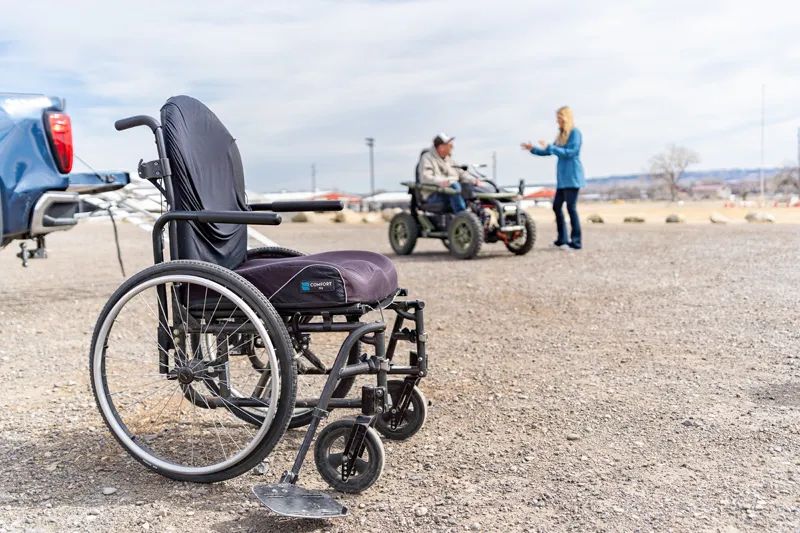
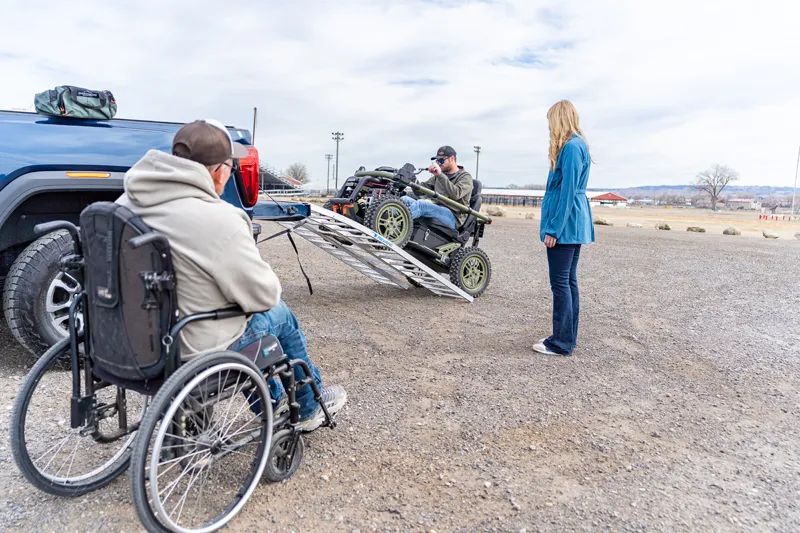
The first grant was used to purchase a Trackchair. It’s an all-terrain power wheelchair that uses caterpillar-style rubber tracks instead of wheels to navigate uneven ground.
“With that first Trackchair, we finally had something tangible,” Kendra continues. “Not only did we start loaning it out, but it gave credibility and other donors saw there really is a need for what we are doing.”
One of the first recipients was DuWayne Wilson, a retired FFA instructor and full-time rancher from Scobey who was paralyzed from the waist down after a farming accident 10 years ago. With the help of CFF’s adaptive equipment, he and many others like him have operated tractors, tended their lands, repaired fences and taken care of livestock. They’ve also been able to hunt, fish, camp and travel with family.
Adaptive equipment is expensive, ranging between $20,000 and $30,000 for each piece. Most insurance companies won’t cover the cost. Fortunately, the Cutting Fences Foundation has nine large pieces to loan. Some are wheelchairs that can traverse across all kinds of terrain. Some help ranchers move from sitting to standing position while being able to move through mud, snow or dirt. Others look like all-terrain vehicles with easy access for those with mobility issues. The CFF loan program allows people with disabilities and injuries to try a piece of equipment or use it for a specific need without having to pay for it.
“Our first loan delivery of the Trackchair was to a rancher in Roy who lives in a remote area and who could hardly get his manual wheelchair from the house to his car,” Kendra says. “When he first tried the standing feature of our Trackchair, he looked at me with tears in his eyes and said, ‘You’re not as tall as I thought you were,’ It was one of the most human moments ever. An eye-to-eye conversation was something that he hadn’t experienced in a long time.”
Every client Kendra helps has their own story to tell. They range in age from early 20s to over 80. All know the reality of sudden, difficult changes in life.
“The loss of things that bring joy or self-worth is so hard,” Kendra says. “I never want anyone to have to lose the ability to do the things that make them who they are.”
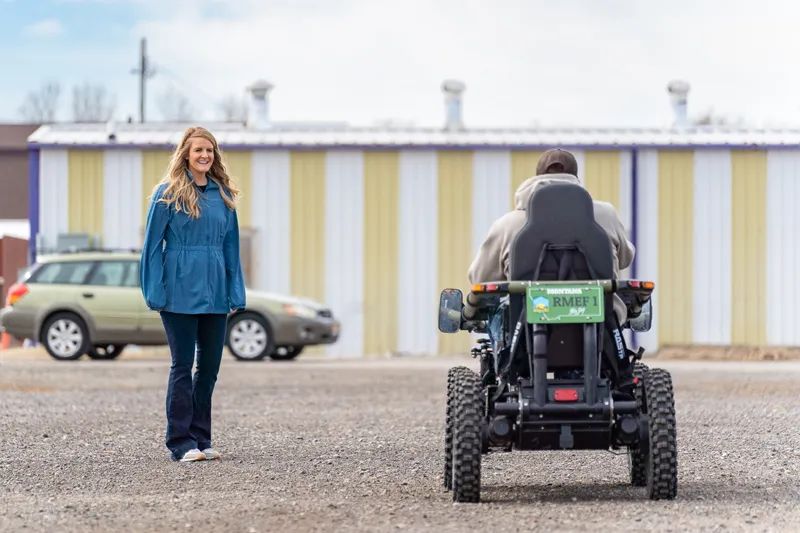
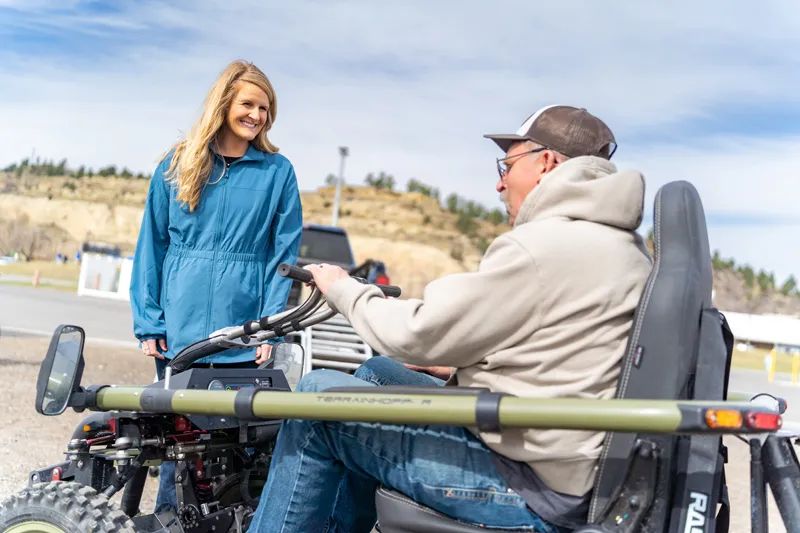
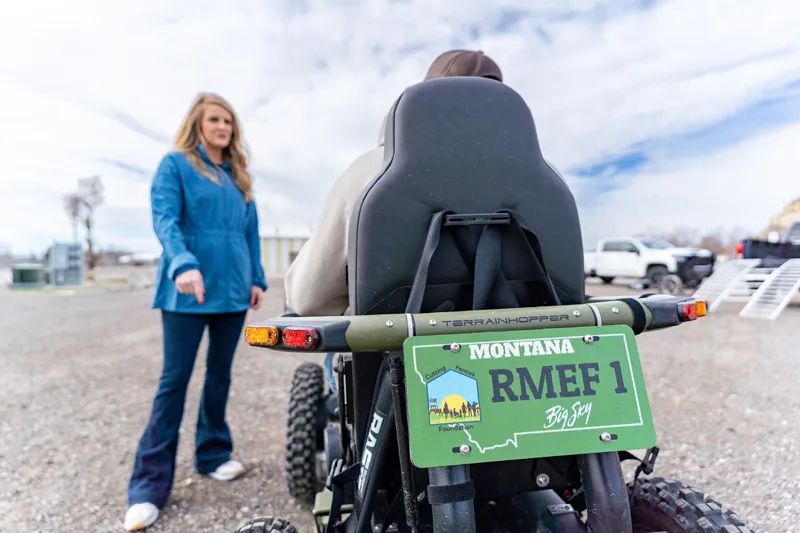
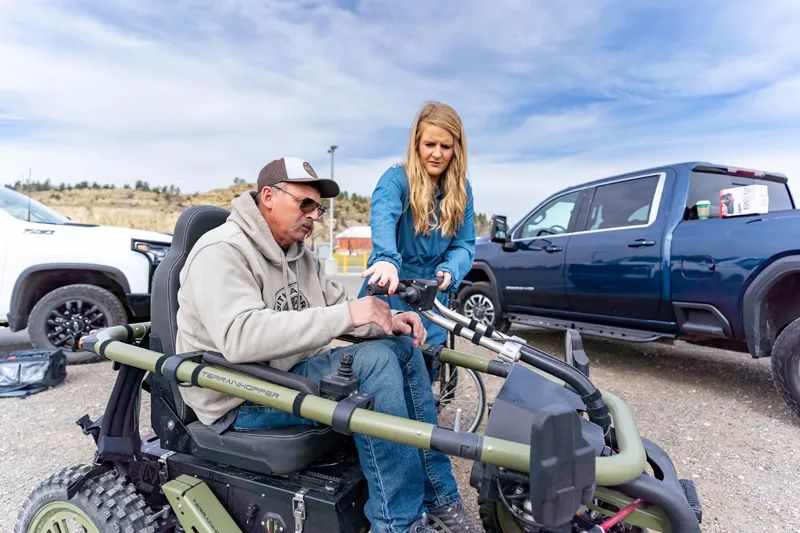
The TerrainHopper, a specialized 4-wheeler, quickly became a favorite with those seeking assistance. Each wheel has its own motor, which allows it to climb stairs or go over boulders. It can even be driven into water for fishing.
It’s what allowed Mac to once again go hunting.
“That little machine can go about anywhere,” he says. “It has meant the world to me to do get back outside and do things I once did. I had a successful hunt and filled my freezer with good venison meat.”
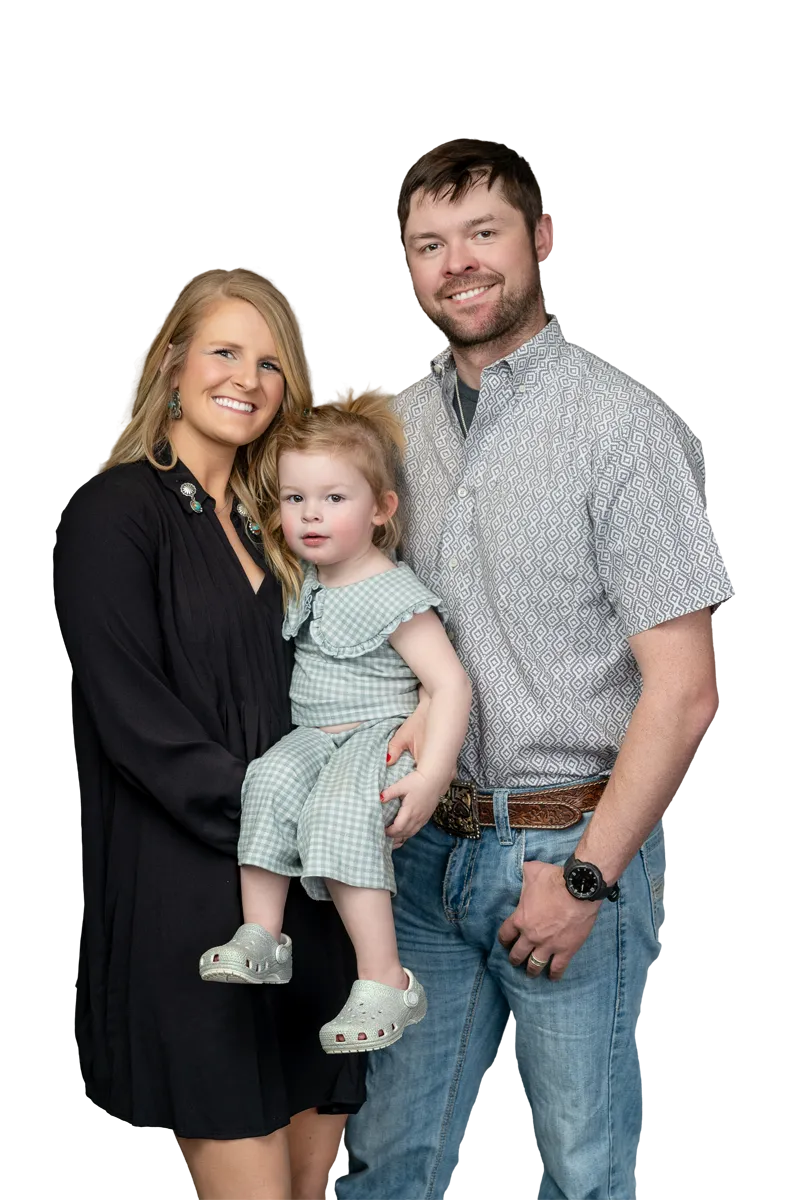
From writing grants and researching the latest in equipment to organizing fundraising events, attending awareness events, or fielding calls from those hoping to use CFF’s equipment, Kendra’s days are packed. Through it all, she cherishes time with her 2-year-old daughter, Scottie Lou, and her husband.
“My work has become a family endeavor,” Kendra says. “Rory helps me so much with delivering and picking up equipment and attending events with me. Scottie knows all the names of the equipment and never turns down a test drive. That’s so rewarding as a mom, to see her have somewhat of an understanding about what I do and learn the joys of serving others.”
Even with nine pieces of equipment, CFF’s machines are consistently out on loan. Kendra hopes, as money allows, to add to the inventory. She’s partnered with extension agencies and fairgrounds around the state, which allow her to store equipment and keep it charged for people in some of the state’s more remote areas.
“Sometimes people don’t need the equipment for a very long time, and sometimes they just need to try it before they buy or find funding for their own,” Kendra says.
Kendra continues to use her podcasts as a platform for awareness and has produced over 50 since she began recording. The stories of farmers and ranchers who’ve suffered injuries or accidents are heart-wrenching. But along with the tough topics are stories of overcoming adversity, and hope.
“Several of my guest have confessed that it’s not easy to share their stories, but doing so has been therapeutic for them,” Kendra says.
One of her favorite stories is that of a veteran who shared his experience transitioning from service back to civilian life. He shared why coming back to agriculture was, in a sense, lifesaving for him. As he spoke about his service, he mentioned a man he served with who had saved him from the brunt of a bomb’s blast. The two had lost touch. Kendra shares how the man who saved him heard the podcast and reached out to her. She was able to connect the two.
“His story was powerful to begin with,” she says. “And then to have them reconnect. It’s something I never could have ever dreamt of coming out of one of my small podcasts. It makes me smile anytime that I think of it. That is still the tiniest thing I could do, in comparison to their selfless service for my freedom.”
Since starting CFF, Kendra has also launched a crisis fund to help provide funding to those who can’t afford their own equipment.
“My hope is that a financial barrier would never be a reason for someone not to receive the equipment that they need,” she says.
Recently, Kendra and her husband moved from Laurel back to her hometown of Geraldine to be closer to family.
“I feel like this is the perfect location for the foundation,” she explains. “Not only for the help and comfort that my family provides for us, but because we’re more centrally located making it easier to serve the state. Feeling reconnected with agriculture and rural life has grounded our mission deeper than ever.”
The stories of the folks whose lives have been changed because of someone else’s generosity never ceases to amaze her. It has created a sense of community that has become the cornerstone of the foundation.
“The people that I’ve connected with, the stories that they have shared and just knowing that we are helping someone out there, it’s hard to describe the feeling. I’m just so grateful, Kendra says. “Every time I get back in my car after I’ve delivered a piece of equipment, I think to myself how incredibly blessed I am to get to help someone. I never want to take that for granted.”